By Jan Cotten, REALTOR® · Sun City, Arizona

The Wise Transition

A guide to making intentional choices for your home, freedom and legacy in later life

Whether to stay or go, how to use your home's equity, how to talk with family, and how to leave the house well: Jan Cotten wrote The Wise Transition from her own experience and her clients'. All ten chapters and the Master Class worksheets are here to read.

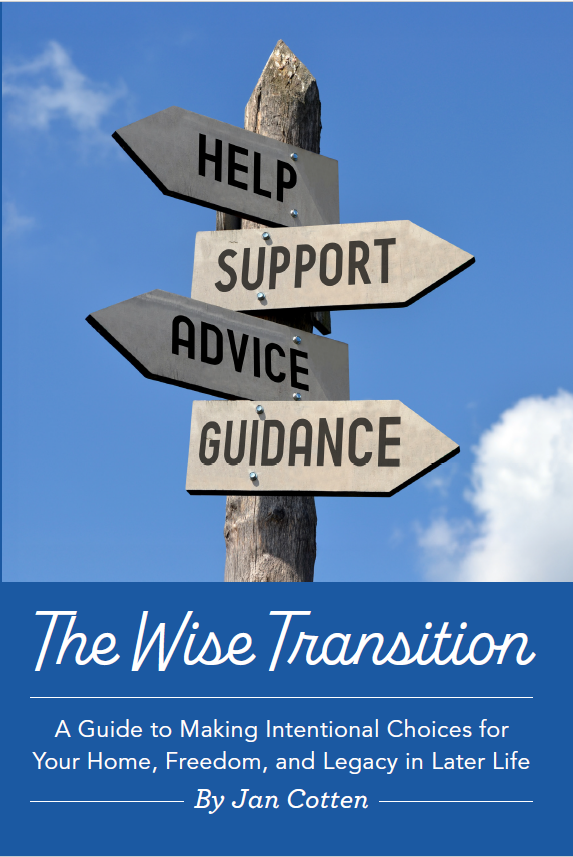
The Wise Transition by Jan Cotten, book cover
The Book

A gentle guide to the decision most people put off

The Wise Transition is written for people who sense that something about their home may need to change: rooms that feel too quiet, upkeep that has turned comfort into a burden, or a question from a loved one that stirred a truth not yet named. Jan Cotten wrote it after navigating her own transition following the loss of her husband.

Ten chapters walk through the whole decision: recognizing the turning point, weighing whether to stay or go, unlocking home equity, talking legacy with family, planning with the right documents, honoring the emotions of leaving, selling with dignity, creating a new home, thriving in the next chapter and leaving a legacy.

Each chapter is matched with a Master Class worksheet of reflection questions, so the reader can move from understanding to a plan at their own pace.

“This isn't the end. It's a continuation, with wisdom.”
Jan Cotten, The Wise Transition
Jan Cotten, REALTOR® and Associate Broker, Sun City, Arizona
About the Author

Jan Cotten wrote this book from experience

Jan Cotten is a REALTOR® and Associate Broker with AXEN Realty, LLC in Sun City, Arizona. She began her career in 1975 in Fairbanks, Alaska, practiced in California, and has lived and worked in the Sun City corridor since 2004.

Her practice centers on the decisions that carry the most weight: senior transitions and downsizing, estate, probate and trust sales, and buying and selling in Sun City, Sun City West and Surprise. She also holds HECM reverse mortgage licensure (NMLS #2080617), so clients can weigh every equity option with one advisor.

After losing her husband, Gary, following forty-six years of marriage, she faced the same questions this book asks. The Wise Transition is the guide she wishes every family had before the decision arrives.

Call or text 623-523-4203

Chapters

Ten chapters and a ten-part Master Class

Begin with the Prologue, read the ten chapters, then use the Master Class worksheets to turn reflection into a plan. Open one section at a time.

Before You Begin

If you're holding this book, chances are you're sensing it: that quiet nudge, a subtle whisper that something in your life, especially related to your home, might need to shift. Perhaps you've found yourself sighing a little more often as you walk from one end of the house to the other or noticed that chores that once felt effortless now demand more energy than you care to give. Maybe a loved one has gently asked, "Are you still happy here?" and the question, instead of soothing, stirred a truth you weren't quite ready to name.

This book is for you. It's for the woman who, like my dear client Jennifer in her mid-80s, is still sharp, witty, and active, but notices small shifts, like her beloved bowling ball feeling just a bit heavier. It's for the gentleman who, after years in a cherished retirement home, realizes the quiet rooms feel a little too quiet, or the upkeep has silently turned comfort into a burden.

It's particularly for those of you who have poured 15, 20, or even 30 years into your retirement home: the place you believed would be your "forever." You chose it with intention, built memories within its walls, and now, the idea of considering anything different can stir a complex mix of love, loyalty, and perhaps, a quiet guilt.

I understand these feelings deeply. My own journey, after my husband passed, led me to grapple with the very questions I explore in these pages. My home, filled with laughter and memory, began to feel too big, too quiet, the upkeep a subtle drain on my evolving energy. This isn't just a guide; it's a reflection of my own walk, too.

I've spent years working with individuals and families navigating these significant life transitions. What I've consistently observed is a profound need for a different kind of conversation, one that isn't about pushing you toward a decision, but about empowering you to make choices from a place of wisdom, not fear. There are countless articles about market trends and legal documents, but very few compassionately address the emotional landscape of letting go of a home that holds a lifetime. The sheer weight of "all the stuff," the fear of losing identity, the worry about family harmony. These are real and often unspoken burdens.

That's why I wrote this book. I wanted to create a gentle, honest space for you to explore these pivotal moments. To help you discern if a tough week has become a consistent sign. To give you permission to acknowledge that your needs, your energy, and your desires have gracefully shifted, as they should. You haven't failed your past self or "gotten it wrong." You have grown.

This isn't about convincing you to move. It's about helping you understand the subtle invitations life gives us to reimagine what's next, to move with intention rather than being forced by circumstance. It's about recognizing that sometimes, the greatest act of self-love is letting go of what once fit perfectly to make space for what will serve you better now.

Within these pages, we'll unpack the emotional currents of transition, explore practical financial options, navigate sensitive family conversations, and ultimately, discover how to thrive in your next chapter, wherever it may lead. You'll find tools, stories, and reflective questions designed to help you tap into your own inner clarity.

So, take a deep breath. Know that you are not alone in this. Your next chapter is yours to shape, and it can be a beautiful continuation, filled with grace, clarity, and peace. Open these pages with an open heart, and let's begin.

In Chapter 1: The Turning Point, we bravely begin to acknowledge those quiet nudges life sends our way, signaling that something might need to shift with our home. Is it just a tough week, or a consistent pattern of physical, emotional, or financial stress? We delve into the subtle language of emotional shifts: that low-grade frustration or the feeling that once-easy chores are now a burden. Through Jennifer's inspiring story, we learn the power of proactive choice, acting before a crisis dictates our path. This chapter is about honest discernment, helping you reconcile your love for your home with the reality of your evolving needs, and identifying the true, often hidden, costs of staying too long out of fear. It's an invitation to begin rewriting your own story, moving from stuck to truly listening to your inner truth.

Chapter 2: Should I Stay or Should I Go? helps you explore one of the most fundamental questions of this transition. We weigh the genuine pros and cons of aging in place, from the comfort of familiar routines to the quiet creep of isolation and demanding upkeep. We then move into a practical assessment of your home's long-term accessibility, asking if your space truly supports your future needs. This chapter guides you through the emotional landscape of potentially leaving a cherished home, helping you acknowledge what you might miss, while powerfully redefining what "freedom" means for you in this stage of life. It's all about embracing the power of proactive choice, acting from a place of strength, and avoiding the profound regret of waiting too long to move on your own terms.

In Chapter 3: Unlocking the Power of Home Equity, we uncover the incredible potential of one of your biggest assets. After years of hard work, your home's value doesn't have to stay locked away. I walk you through various strategic options to access this equity, whether that's selling, refinancing, using a HELOC, or even a reverse mortgage, sharing real client stories like Sam, John, and Nancy to illuminate their benefits. We explore how your equity can generate monthly income or support a more comfortable lifestyle, and most importantly, how to navigate these financial waters wisely while protecting yourself from predatory practices. It's about empowering you to use your home's value not selfishly, but intentionally, to fund your peace of mind and next chapter.

Chapter 4: Talking Legacy and Family delves into those sensitive, yet crucial, conversations about your home and your legacy. I guide you on how to gently initiate discussions with your children, emphasizing that it's about starting a dialogue, not delivering a demand. We explore the serious considerations and potential pitfalls of adding children to your deed, especially regarding taxes and community fees, and I share strategies to prevent family tension after you're gone. This chapter offers thoughtful ways to choose an heir (or no heir), how to gracefully handle situations where children don't want the house, and meaningful ways to include your beloved grandchildren in your legacy, ensuring your wishes are honored with love and clarity.

Chapter 5: Planning for the Future with Confidence empowers you with the knowledge to safeguard your home and wishes through essential legal and financial documents. We simplify the differences between a Will and a Living Trust, highlighting how trusts can help you avoid probate and keep your affairs private. I share personal insights on how vital it is to protect your spouse's future, ensuring they're not left navigating chaos during grief. We also address a common fear: protecting your home from potential medical expenses, emphasizing the critical role of elder law attorneys. This chapter is about building your trusted team, professionals who understand seniors, and taking proactive steps to leave behind peace, not paperwork. It's never too late to gain clarity and control.

Chapter 6: Emotional Readiness and Identity explores the deep emotional currents that surface when considering leaving a home. It's perfectly normal for the idea of moving to feel like losing a part of yourself; your home holds so much of your identity. We dive into honoring that grief and embracing your memories, recognizing that your history lives within you, not just in the walls. I offer gentle ways to build a new sense of "home" in a new space, focusing on familiarity and emotional connection rather than just floor plans. This chapter provides affirmations and strategies for redefining who you are beyond homeownership, encouraging you to embrace the beautiful new version of yourself that's emerging.

In Chapter 7: Making the Move (If You Choose To), we tackle the practicalities of selling your home, transforming a potentially overwhelming process into an empowering one. I guide you on where to begin, from setting your timeline to getting a home value assessment without feeling pressured. We discuss what truly matters when preparing your home for sale, focusing on cleanliness and simple fixes rather than costly renovations, and how to find a trustworthy real estate agent who genuinely understands seniors. This chapter provides strategies for valuing and pricing your home fairly, managing accumulated belongings (with love and intention!), and most importantly, navigating overwhelm so you can sell with dignity and true peace of mind.

Chapter 8: Creating a New Home, Not Just a New House shifts our focus to the exciting possibilities of designing a living space that truly reflects your next chapter. We explore what to prioritize now: function over flash, connection over isolation, and the importance of an emotional "yes." We look at balancing comfort, safety, and independence in your new environment, considering design choices that support "future you." This chapter helps you weigh whether renting or buying is the better path for your current lifestyle, and how to make a smaller space feel authentically yours. It's all about building new connections, carrying your home's spirit with you, and designing a peaceful, alive haven that perfectly fits who you are becoming.

Chapter 9: Thriving in Your Next Chapter is all about creating a vibrant, engaging, and deeply fulfilling life, regardless of your address. We explore practical ways to stay connected and social after a move, emphasizing consistency and the courage to say "yes" to new opportunities. This chapter guides you in rebuilding daily routines for stability and joy, making space for cherished hobbies and new interests, and caring for your body and mind in this new season of life. It's about finding meaning beyond homeownership, avoiding loneliness, and rediscovering what makes you feel truly alive. You'll see that thriving at any age means choosing what lights you up and measuring success in new, deeply personal ways.

Finally, Chapter 10: Your Home, Your Legacy, invites you to consider the profound impact you leave behind. Your home is a testament to the life you've built, and this chapter helps you shape a legacy beyond bricks and wood. We explore how to ensure your intangible qualities, stories, and memories are cherished and passed on, whether through memory letters, videos, or symbolic acts. This chapter discusses the powerful lessons you can learn through how you handle life's transitions, ensuring your final home and chapter feel like a gift, not a burden, for your loved ones. It's about giving your home a sacred send-off and understanding what it truly means to finish well, with grace, clarity, and peace.

Master Class Overview

Reimagining Home: Your Master Class for Thriving in Your Next Chapter

This Master Class isn't just a collection of questions; it's your personalized journey to truly integrate the profound wisdom from the book. Each worksheet, meticulously crafted for every chapter, invites you to deepen your self-reflection, confront hidden fears, and clarify your deepest desires for your next chapter. From discerning quiet nudges and assessing your home's financial potential to navigating sensitive family conversations and designing a new haven that truly fits, this class transforms insights into actionable steps. It's about empowering you to proactively shape your future with confidence and peace, ensuring your home supports a vibrant, meaningful life.

Remember, you don't have to embark on this journey alone; I'm here to guide you every step of the way, helping you unlock newfound clarity and joy.

The Ten Chapters

If I had listened to my fear that day, you wouldn't be reading this book. I had no idea that one decision would change everything. You've probably had a moment like this, too. A crossroads where you had to make a decision before you felt ready. Perhaps you are standing there right now. Maybe you're sensing a quiet nudge that something needs to shift, but you are not entirely sure if it is a passing mood or a deeper truth.

This book is for you, whether you're just starting to feel that nudge or you've been living with the discomfort for a while. It's about recognizing the subtle invitations life gives us to reimagine what's next, to move with intention rather than being forced by circumstance. It is about understanding that sometimes, the greatest act of self-love is letting go of what once fit perfectly to make space for what will serve you better now.

When a Tough Week Becomes a Consistent Sign

How do you know if it's truly time to make a change, or if you're just having a tough week? That's a wise and heartfelt question. Everyone has difficult days, especially as we grow older and life shifts around us. But how do you know when those tough moments point to something deeper?

The answer often lies in patterns, not just passing moods. If you're simply having a rough day or week, it usually feels isolated, an emotional weather front that moves on. But when a challenge becomes consistent, when you're noticing physical, emotional, or financial stress three or more times within a couple of weeks, it may be time to pause and listen more closely. That's not about rushing into decisions. It's about becoming more honest with yourself.

Let's take gardening as an example. Perhaps you've always loved tending your plants and flowers. It brought you joy, peace, and even pride. But lately, you are noticing more weeds than usual, and you cannot quite keep up. You feel a little irritated when you walk outside. Perhaps a neighbor says, "Hey, are you still doing your garden?" And it catches you off guard. You didn't even realize how much had slipped.

That's the kind of quiet nudge to pay attention to. It is not about defeat, it's about discernment. If the same frustrations are showing up again and again, it may be time for a gentle change. Perhaps that means getting help. Perhaps it means choosing a home with less upkeep. Or perhaps it's just time to talk through your options. When small struggles become repeated signs, they are not failures. They are invitations: to listen, reflect, and possibly reimagine what would feel better next.

Think back to a time when you felt stuck. What stopped you from making the leap? Was it fear, doubt, or simply the comfort of the familiar? And what if you had made a different choice?

The Quiet Language of Emotional Shifts

What are the emotional signs that tell people it's time to consider a move? This isn't about defeat; it's about discernment. And the signs often start quietly, long before we take any real action.

You may notice subtle emotional shifts: a low-grade frustration that wasn't there before. Perhaps you are not as confident in your ability to manage the house as you once were. It's not that you cannot do it; it's that it takes more effort than it used to, and that effort is beginning to wear on you.

You might find yourself sighing more as you walk from one end of the house to the other. The kitchen feels farther away. Just navigating one or two steps takes longer. Simple chores, like vacuuming or changing a light bulb, feel daunting, not because you're incapable, but because they cost more energy than they once did.

Emotionally, the signs often sound like this: "I used to enjoy this, but now it just feels like a burden." Or, "I didn't use to snap at people so much." You might feel more irritable with loved ones, even if you do not mean to be. A kind offer to help might sting more than soothe, because it brings up a truth you are not ready to name.

Sometimes the underlying emotion is frustration. Sometimes it's concern, quiet anger, or even embarrassment. And beneath it all, there may be a growing awareness: I am not who I was at 55. And that is okay.

The emotional signs are not warnings; they are invitations. To acknowledge the truth of what's shifting. To reflect. And perhaps to begin a conversation about what would support you better now.

Imagine you are in this situation. What would you do? What is stopping you from making the choice you already know is right? You know what feels right for you, even if you haven't vocalized it yet. What story are you telling yourself about why you cannot move forward?

Most people think resilience is something you are born with, but it's more like a muscle. The more you push yourself through challenges, the stronger it gets. The trick is to embrace the strain, not run from it. You can build your resilience by acknowledging these feelings, even if they are uncomfortable.

Jennifer's Story: Choosing What's Next While She Still Could

Jennifer had been divorced for many years and loved the independence of living alone. In her mid-80s now, she was still sharp, witty, and active. A lifelong bowler, she thrived on the rhythm of the game, the friendships, and the sense of freedom it gave her. She lived in a beautifully furnished two-bedroom, two-bath townhouse: elegant, comfortable, and well cared for.

But recently, Jennifer noticed small shifts. Lifting her bowling ball was just a bit harder. She still loved the game, but her body was moving more slowly. And she noticed. She didn't dismiss it. She didn't deny it. Jennifer is the kind of woman who pays attention to the signs.

When her children came to visit, she gently shared her observations. She didn't dramatize them, but she also didn't hide them. Her kids listened carefully. They lived four hours away, and the thought of reaching her in an emergency weighed heavily on them. So, together, they made a plan. They found her a lovely home just a block or two away from where they lived. It wasn't a forced decision. It was collaborative. Thoughtful. Done in love and wisdom.

Her townhouse sold quickly, and now, Jennifer lives in a new home that fits her life today: still independent, still involved, still bowling. She found a local league. She bowls less frequently, sure, but she is still in the game.

Jennifer didn't wait for a crisis to decide. She chose to shift before life forced her to. And that's the power of her story: change doesn't have to be a loss. Sometimes, it is a gift, one you give yourself and the people who love you.

Just as Jennifer was able to recognize that her body was slowing down, you too can recognize when your current situation is no longer serving your needs. You can honor the love you have for your current home without letting it hold you back from a future that better supports you.

Reconciling Love and Reality

"My body may be slowing down, but my heart still loves this place. How do I reconcile that?"

When I moved into this home with my husband thirteen years ago, we believed it would be our last move. We intentionally downsized from the huge house and acreage (and all the toys), to a comfortable place in this warm and welcoming community of Sun City. We made friends. We danced. We upgraded things, a lot! We planned to grow old here, together.

But life doesn't always follow the plans we make. When my husband was diagnosed with a terminal illness and later passed, everything changed. I have stayed so far. This house is filled with love and memory, so it still feels like home. And truthfully, I'm in good health. I'm active, still working full-time, and loving what I do.

Not all at once, but slowly, subtly, I have started noticing a shift: not in my ability, but in my energy. The house that once felt perfect is beginning to feel a little too big. A little too quiet. The upkeep, the maintenance, even walking through certain rooms, has begun to feel more like effort than enjoyment. And while I can still handle everything in this house, sometimes I ask myself: do I still want to?

And yet, my heart still loves this place. It holds the laughter, the rituals, the dreams we built here. It's a container for precious memories. So, how do I reconcile that love with the reality that my body and spirit may need something different now?

Here's what I have come to believe: Letting go of a home doesn't mean letting go of the life that happened inside it. The love stays. The memories stay. The growth stays. What changes is the shape of your surroundings to meet who you are now, not who you were when you first moved in.

This isn't about giving up. It's about giving yourself the same care and consideration you once gave to others. It is not disloyal to the life you built; it is an act of grace for the life you still have ahead of you.

And I have a small confession to make: this book is just as much my reflections on "what's next" as it is a guide for you. I hope that is okay.

Think about how this applies to your own experience. How have your needs and desires changed over time? What aspects of your current home no longer align with your ideal daily life?

The True Cost of Staying Too Long

"What is the cost, emotionally and financially, of staying too long in a home that no longer fits?"

This is a big one. It's where comfort starts to turn into cost, in ways people do not always realize until it is too late.

A growing sense of isolation, "I am alone more than I thought I would be."

Frustration or resentment, "I used to love this space; now it just drains me."

Guilt, "I should be grateful, but I am overwhelmed."

Missed opportunities for joy, ease, travel, or connection.

"Sometimes, the emotional cost is subtle, like the weight of things I do not use anymore or the loneliness that creeps in when rooms stay dark and quiet."

You might say something like: "People talk about equity like it's a future asset, but sometimes it becomes a burden, when the cost of upkeep quietly eats away at it."

Sometimes the cost isn't obvious, not at first. You look around your home and think, "This still works. I am managing." But what you do not see right away are the quiet ways it starts wearing you down: emotionally, financially, even physically.

Emotionally, there's the fatigue of keeping up with a space that no longer matches your daily life. Rooms go unused. Closets remain full of things that do not serve you anymore. And eventually, the home you once loved starts to feel more like a list of chores than a source of comfort. You might not even notice it happening at first, but the weight of "too much" builds slowly, until even little things start to feel heavy.

There's also the loneliness. When you stay too long in a space that is no longer aligned with your current life, it can feel like the home is holding you in place, even as life moves on without you.

Financially, the costs can sneak up on you. Maintenance adds up: HVAC systems, roof repairs, exterior upkeep. Then there is the cost of trying to adapt your home for aging in place: things like grab bars, walk-in tubs or roll-in showers, wider doorways, ramps, and slip-resistant floors. These are smart investments in theory, but not every home is built to adapt. And by the time you add it all up, you might realize it would have been wiser to move somewhere that already meets your future needs.

The financial cost also includes rising maintenance or repair costs, paying for help with tasks you once did yourself, losing out on the peak equity you could be using now, and the risk of devaluing the property if left too long without updates.

And then there is this: if you wait until your health declines or a crisis happens, you lose the freedom to move on your terms. Decisions get rushed. Choices get limited. And what could have been a thoughtful, empowering move becomes a reactive, stressful one.

The true cost of staying too long isn't just in dollars; it is in freedom, energy, and the joy you could have had if you had made the choice sooner.

What story are you telling yourself about your home and your ability to make a change? We all have a narrative running in our heads. Maybe yours is saying, "I am not ready yet." But what if that is just a story? What if you rewrote it right now?

Love Versus Fear: Knowing the Difference

"How do I know if I'm holding on out of love or out of fear?"

Holding on out of love feels peaceful, joyful, even if bittersweet. It's rooted in appreciation. Holding on out of fear feels tense, heavy, and resistant. It's rooted in "what ifs" and worry.

You might ask yourself:

"If I imagine living somewhere else, do I feel sad or scared?"

"Am I staying because I love this place, or because I do not know what else I would do?"

"Would I still choose this home today if I were making the decision fresh?"

Love doesn't always mean staying. Sometimes, love looks like knowing when to let go with grace.

This is one of the hardest questions to answer, not because we do not know the truth deep down, but because it's often wrapped in layers of habit, identity, and emotion.

Love and fear can look a lot alike when it comes to holding on to a home. Love says, "This place means something to me. I'm proud of what I have built here." But fear says, "I do not know who I will be without this place." Love feels warm, even if bittersweet. Fear feels tight and uncertain, like something is slipping out of your control.

One friend I spoke with said something that stuck with me: "The question I asked myself was, what if the next time I drove by my house, I had to keep going because it wasn't mine anymore, how would I feel?" That's a revealing moment. If the thought fills you with sorrow, perhaps it is not time yet. But if the thought stirs up peace, or even relief, you might already be further along than you realized.

Sometimes we hold on because we genuinely love the space, and it still supports us. But other times, we are clinging because we are afraid of change, afraid of losing control, afraid of feeling forgotten. That's when it's time to ask yourself: "If I were not afraid what would I choose?"

Here's what I have learned, about myself and others: Love honors the past. But fear tries to freeze it.

And you deserve more than to live frozen in time, surrounded by things you no longer need, staying in a house that no longer fits, just because the alternative feels scary. You are not letting go of the memories. You are just releasing the structure that once held them. And when that choice is made from love, not fear, it becomes a doorway to peace.

Releasing Guilt and Embracing Growth

"When I chose this home for retirement, I truly believed it would be my forever place. So why do I feel guilty even considering a move?"

That feeling? It is incredibly common. And incredibly human.

When you bought this home, whether it was 10, 15, or even 20 years ago, it probably felt like your reward. The home where you could finally settle in and just be. You carefully chose the layout, the community, and the routines. You created memories. You built a second chapter of life here.

So now, the idea of letting go can stir up guilt, not because the home isn't serving you anymore, but because it feels like you're betraying a promise you made to yourself.

You might ask:

"Did I get it wrong back then?"

"Am I being ungrateful?"

"What will people think if I leave a home I once called perfect?"

But here's the truth: Needing something different now doesn't mean you made a mistake then. It simply means you have grown. Your needs, your energy, your priorities: they have all shifted, as they should.

Guilt has a way of making us feel like we are giving up. But in reality? Choosing to move forward with clarity and courage is one of the most loving things you can do, for yourself and for the people who care about you.

There's no shame in realizing your "forever" needs a refresh. Sometimes, holding on to the dream you had back then prevents you from living fully right now.

At that point, you're not just thinking about leaving a house; you are contemplating leaving what you believed was your final chapter. It's a different kind of guilt than leaving a family home. It is more like: "Did I misjudge what I would need? Am I betraying the dream I had for this phase of life?"

Keeping an open mind, showing gratitude for the life and home you have had, and gently looking ahead can ease those feelings of guilt. It is not about forgetting where you have been; it is about giving yourself permission to grow into what's next.

What Others Are Doing: A Glimpse into Shared Experiences

"What do other people my age do when their home starts to feel too big or too quiet?"

More than you might think. When I talk with clients, friends, or even neighbors who have lived in their home for 15 or 20-plus years, I hear a similar theme: "I still love my house, but it just feels like too much now."

Sometimes it is the space: it is harder to clean, harder to move around in, harder to justify heating and cooling empty rooms. Other times, it is the quiet. A silence that used to feel peaceful now feels isolating. The neighborhood has changed. The routines have slowed. And the house just does not "fit" like it used to.

So what do people do? Some decide to right-size, not necessarily downsize, but shift into a space that is easier to manage and better aligned with how they want to live today. Perhaps it is a smaller home in the same community. Perhaps it is an apartment in an active adult complex or a condo near family.

Others choose to move closer to loved ones, trading square footage for connection. They want to be part of the everyday moments again: dinners, birthdays, grandkids' soccer games, not just holiday visits.

Some explore independent or senior living communities, where they still have their own space, but also have access to social events, meals, transportation, and care when needed. Not because they have to, but because it adds freedom.

And a few even stay put, but bring in help or make strategic changes to make their home work better: hiring a cleaner, installing safety features, or closing off unused rooms to simplify life.

There is no one-size-fits-all solution, but the one thing people do not do anymore? Pretend it is not happening. They listen to the quiet. They pay attention to how they feel in the space. And then, they start imagining what could feel better.

You, too, can begin to imagine what could feel better for you. What changes, big or small, could bring more ease and joy into your daily life?

Asking Yourself the Right Questions

"What questions should I be asking myself to know if I am ready for this kind of change?"

When you are facing a decision this personal, sometimes the best answers come not from others, but from the questions you ask yourself. If you are unsure whether it is time to move, try asking:

"Do I still feel at ease in this home, or is it starting to feel like a chore?"

"Am I living in every room or just a few?"

"If something unexpected happened, an illness, a fall, would this home support me or complicate things?"

"Does the thought of moving make me feel free or just afraid?"

"Am I staying because I love this home, or because I cannot imagine what's next?"

"If I were choosing a home today, would I choose this one again?"

"Am I avoiding this decision or thoughtfully delaying it?"

"Do I want to make these decisions now, while I still have control over the pace and the process?"

"Do I want the power to decide where my most treasured belongings go?"

"Would making a change now be easier on my family, or harder, if wait until later?"

These are not questions to answer in a rush. They are gentle invitations to tune in to what your life needs now, not what made sense a decade ago.

The truth often reveals itself not with a loud yes or no, but in the quiet sighs of daily life: the groan when you haul laundry across the house, the ache after cleaning out the gutters, the long pause when someone asks if you are still happy here.

Being ready for change doesn't mean you stop loving your home. It means you love yourself enough to ask, "What would support me best moving forward?"

Navigating Conversations with Your Spouse

"How do I talk to my spouse if we are not on the same page about moving?"

This is more common than most couples realize, and it doesn't mean anything is wrong. It just means you are having two different experiences in the same space.

One of you might be feeling the weight of upkeep or the loneliness of a too-quiet home. The other might still find comfort in the familiar routine, the neighbors, the memories. Both are valid. But when those feelings are not talked about, it is easy to fall into silence, or even quiet resentment.

The key is not to convince. The key is to begin the conversation gently and honestly. Try something like: "Can we talk about something I have been thinking about, not because I have made a decision, but because I need to share what's on my heart?"

Then speak your truth without rushing toward a solution. Be curious, not combative. Ask questions like:

"What does this house still give you?"

"What would you miss most if we left?"

"What do you think would feel easier, or harder, if we made a change?"

Give space for both people to reflect and revisit the conversation, not solve it in one sitting.

And perhaps most importantly, remember that sometimes one partner sees the signs first. That doesn't make them pushy; it makes them observant. And often, with time and open-hearted listening, the other partner catches up.

Start by finding common ground. Perhaps you both agree that certain spaces feel cluttered or underused. Perhaps you both notice that yardwork is not as easy as it used to be. Start there.

You do not have to make a big decision right away. Sometimes, the first step is simply clearing out a room you have both been meaning to tackle. One small act of forward movement, done together, can open the door to a larger conversation.

Change does not happen on the same timeline for everyone. But conversations like these, grounded in love and small shared steps, can eventually lead you both to the same page.

Beginning to Imagine What's Next

"I have been in this house for so long, how do I even begin thinking about what's next?"

First, take a deep breath. You are not alone, and you are not behind. You are just at the start of a new season of life that deserves reflection, care, and curiosity.

When you have lived in a home for 15 or 20 years, even one you chose for retirement, it becomes more than just where you live. It becomes part of who you are. Thinking about what's next can feel like trying to rewrite your own story, and that's not something you do overnight.

So do not rush. Do not pressure yourself to have a plan by next week. Start by asking gentle questions instead of making hard decisions.

"What does an ideal day look like for me now?"

"What would make life feel easier?"

"Am I living in a house. or in a memory?"

"If I gave myself permission to dream, what would I want the next chapter to look like?"

You do not have to know all the answers yet. You just have to be willing to wonder.

And here's the truth: thinking about what's next doesn't mean you are letting go of your past. It means you are honoring it, and giving yourself space to grow again.

What's next might be a simpler home, a new neighborhood, or a fresh routine. It might be closer to family, or closer to peace. Whatever it is, it deserves to be chosen with the same care you gave to the life you have built so far.

This isn't the end. It's a continuation, with wisdom.
For many people, aging in place sounds ideal. It means staying in the home you know, in the community you chose, surrounded by your routines and familiar comforts. You wake up in your own bed. You make your coffee in your own kitchen. You know every light switch, every cabinet hinge, patio corner, the best time to get in and out of the Fry's parking lot, and every neighbor's name. That kind of comfort has real value.

You have likely experienced this deep connection to your home, where every nook and cranny holds a memory. This is your personal sanctuary, a place where you have built a life. It is natural to want to stay rooted in such a space. You feel secure in your daily rhythms and the relationships you have cultivated over time. But sometimes, what feels right today may not be what serves you best tomorrow. You might be starting to notice subtle shifts, a quiet whisper that suggests your needs are evolving.

The Pros and Cons of Aging in Place

What are the real pros and cons of aging in place?

Aging in place can help you maintain your independence and keep your lifestyle steady. You might feel more secure emotionally, especially if you have strong community ties, nearby friends, or a support network you have built over time. And for some, there is a clear financial benefit: no need to spend money on a move or pay into a new housing situation.

But here is what often gets overlooked: the cons tend to sneak in quietly and grow louder over time. The upkeep becomes more demanding. Blowing the dust out of the garage, cleaning multiple patios, and even changing light bulbs starts to feel harder. Safety concerns increase, especially in homes not designed for aging bodies. Social circles shrink. Loneliness creeps in. And what once felt like independence can slowly become isolation.

Then there is the emotional cost of waiting too long to consider other options, until a fall, illness, or loss makes the decision for you.

That does not mean aging in place is the wrong choice. It just means it needs to be the right choice, based on honest reflection, not fear of change. And if you do choose to stay, consider how your home could be adapted to support you in the long run: things like grab bars, better lighting, slip-resistant flooring, wider doors, or professional help with cleaning and maintenance.

Aging in place can be a beautiful chapter. But it is most successful when it is part of a plan, not just a default.

Have you considered the long-term implications of staying in your current home? How do you envision your daily life in 5 or 10 years within your current space?

Assessing Your Home's Long-Term Accessibility

How do you know if your current home can be made safe and accessible long term?

Many polls show that people over 70 say it is important to stay in their current home as long as possible. But here is the surprising part: nearly two-thirds of those people have not given much, or any, thought to modifying their home to support aging in place.

That disconnect is understandable. When things still feel manageable, it is easy to assume they will stay manageable. But the truth is, aging in place safely is not just about desire; it is about design.

Start by asking yourself one simple question: Is my home supporting the way I live today, or the way I lived 10 years ago?

A lot of retirement-style homes were designed with simplicity in mind: single level, low maintenance, and in some cases, smaller yards. That is a great starting point. But even those homes often need a few key updates to make them safe and accessible long term.

Here are a few things for you to consider:

Bathrooms: Can you step in and out of the shower safely? Would a grab bar help? Could a roll-in or walk-in shower be installed without major remodeling?

Flooring: Are there rugs or transitions that could cause trips? Do you have slippery tile that might need better traction?

Lighting: Are walkways, hallways, and bedrooms well lit, especially at night?

Doorways and Hallways: Is there enough clearance if you ever needed to use a walker or wheelchair?

Kitchen and Storage: Can you easily reach what you need without climbing, stretching, or bending too much?

Front Entry: Are there steps, or is it level? Would a ramp be helpful, even temporarily?

Daily Flow: Do you find yourself avoiding parts of the house because they are harder to access?

And here is something many people do not think about: even if the home can be adapted, will it still feel like home once you make those changes? Sometimes adding grab bars, ramps, or lift chairs solves the practical issues, but changes the emotional feel of the space.

So yes, many homes can be made safer. But it is worth asking: Do I want to invest in adapting this home, or would it make more sense to find a place that is already set up for how I live now? Safety is the priority, but comfort and dignity matter too.

Take a moment to truly assess your current living space. What specific areas or features of your home might pose challenges as you age? What changes would truly enhance your comfort and safety?

The Emotional Landscape of Leaving Home

What would you be giving up emotionally if you left this home?

That is a question that deserves real time to answer, because it is not just about leaving a building. It is about leaving behind a chapter of life.

This home may have been where you landed after a big life change: retirement, an empty nest, the loss of a spouse, or the closing of a long career. It may be where you rediscovered yourself, where you reconnected with hobbies, made new friendships, or found peace you did not have before.

So yes, leaving means giving up some of that. You may be saying goodbye to neighbors you know by name, to a kitchen that has held every morning routine for the last 15 years. To the way the light hits the wall at sunset. To the comfort of knowing exactly where everything is.

You may feel like you are giving up control. Or the feeling of being grounded. Or even a piece of your identity.

But here is what you are not giving up: The memories. The growth. The lessons. The love. Those do not stay behind when you hand over the keys. They come with you, folded into who you have become.

And sometimes, in letting go of what is familiar, you create room for what is possible. You are not erasing what was. You are simply asking yourself: Is this chapter complete? Am I ready for something new, without losing what made this home meaningful?

Leaving a home is emotional. It should be. But emotions do not mean you are making the wrong choice. They just mean the home meant something. And that is a beautiful thing.

Imagine you are standing at the threshold of a new home. What would you truly miss about your current place? What emotions arise when you consider leaving those things behind?

Redefining Freedom in a New Environment

"Would moving into a more supportive environment, like independent or assisted living, really give me more freedom?"

The short answer? For some people, absolutely. For others, not at all. It really depends on what freedom means to you.

Some people feel a huge sense of relief when they move into an independent living community. They are done with maintenance calls. Done worrying about roof leaks, yard work, or dragging trash bins to the curb. They have access to transportation, group activities, security, and social events without having to plan or drive across town. For them, it feels like freedom.

Others, though, feel like they are giving up too much control. The idea of rules, shared walls, or downsizing into a smaller space can feel restrictive, not liberating. They may worry about losing privacy, independence, or the ability to make spontaneous choices.

The key is to define freedom for yourself. Do you feel "free" when you have less responsibility, or do you feel "free" when you are completely independent, even if it is harder?

If the idea of simplifying your daily life, being around people your age, and having more time for what you enjoy excites you, then yes, an independent living community might be exactly the kind of freedom you are craving. But if you are someone who loves your space, your schedule, and your solitude, then "freedom" might mean something else, and that is okay, too.

There is no one definition. But the best decisions happen when you stop asking, "What do people say?" and start asking, "What does freedom mean to me right now?"

I had a client, let's call him Kevin. He lived in the Midwest, in the long-time family home that he had inherited. The house was old; the best feature was the acreage and location. He was always getting calls from prospective buyers. When he finally sold, he chose Sun City for the weather, no more snow and cold for him! He is an avid hiker, photographer, and traveler.

He loved the house we helped him purchase and thought it would be his last home. And then he visited some friends at their home in a local independent living community. Once he saw the amenities and lifestyle, and met residents who were just like him, active and thriving, he decided to sell and move into that community.

His comment to me was, "I thought these communities were only for the super old and frail, and I learned that is not true at all. I love it here and I am happy that I decided to move here sooner than later."

Oh, and we have met for lunch a few times at one of the community restaurants, and I can see why he chose to move; it was wonderful.

Consider your personal definition of freedom. What aspects of your life truly make you feel liberated, and how does your current home support or hinder that feeling?

What to Look For in a Supportive Environment

"If I consider moving into independent or assisted living, what should I look for?"

First, give yourself credit for even asking the question. It means you are being proactive, not reactive. You are considering what would support your life going forward, not just what worked in the past.

Whether you are exploring independent living or assisted living, the most important thing to look for is fit. Not just physically, but emotionally, socially, and spiritually. You want a place that feels good, not just one that looks good on paper.

Here are some key things for you to pay attention to:

Atmosphere: Do the residents seem genuinely content? Are the staff warm and responsive? Could you picture yourself enjoying a cup of coffee in the common areas, or does it feel stiff and impersonal?

Community vibe: Are there activities that interest you, or at least people you would like to talk to? Can you bring your personality with you, or will you feel like just another name on a door?

Support and services: What is included, and what is not? If you ever need more help, will you be able to access it without having to move again, or having to pay more in fees?

Flexibility and privacy: Can you keep your routines? Do you have autonomy over things like meal times, visitors, and hobbies?

Location: Is it close to family or friends? Are the surroundings familiar, or would this feel like starting over?

And of course, cost and contract terms matter. Ask clear questions about pricing, what happens if your health needs change, and whether your housing fees increase over time.

Most importantly, trust your instincts. Tour a few places. Walk the halls. Breathe the air. Ask yourself, "Could I feel like myself here?" Because moving into a community is not just about care, it is about quality of life.

You are taking a significant step by exploring these options. What values are most important to you in a living environment? How can you ensure any new place aligns with those values?

Making Peace with a Neighborhood Transition

"How do I make peace with the idea of leaving a neighborhood I love?"

Leaving a neighborhood does not always mean leaving your community. In places like Sun City, where people often move between different types of homes as their needs change, it is entirely possible to make a transition that supports your health and comfort, without giving up the neighborhood feel you love.

I have, in fact had clients who purchased a two bedroom, two bath townhouse, then decided it was too small, and purchased a three-bedroom single family home; then their family in Kansas needed them more often, so they sold the larger home and purchased a two bedroom town home again, this time closer to the pickleball courts! Now they spend part of the year in Kansas with the family and part of the year here, avidly playing pickleball every day!

That said, even moving a short distance can stir up emotions. It might mean saying goodbye to a street you have grown attached to, a patio view you enjoy, or a neighbor you see on your morning walk. It is okay to feel hesitant. Change, even good change, brings up mixed feelings.

But here is the beautiful part: you can stay rooted in your larger community while replanting yourself in a space that fits your life better now. Perhaps that is a Gemini twin home where the HOA handles the exterior maintenance. Or a townhouse where you no longer have to worry about roof repairs or yard work. You are still independent, still in Sun City, still surrounded by the lifestyle you chose, but with less on your shoulders.

Making peace with a move is not always about letting go. Sometimes, it is about finding a better fit right down the road. So honor the connection you have built where you are, and let that same spirit guide you toward where you will thrive next.

How do you define "community" in your life? How important is it for you to maintain connections within your current community, even if your physical address changes?

The Power of Proactive Choice

"Is it better to move now while I am healthy or wait until I absolutely have to?"

There is a quiet power in making a decision before life makes it for you. When you are still healthy, mobile, and thinking clearly, you are in the best position to choose what comes next, on your terms, at your pace, with the people and support systems you want in place.

Waiting until you "have to" might mean making choices under stress. After an illness. After a fall. After the loss of a partner. And when that happens, what once felt like a thoughtful transition can quickly become a scramble.

Moving while you are healthy gives you:

Time to explore options

Time to sort and organize your belongings without pressure

Time to emotionally prepare, not just react

And most importantly, the freedom to choose what feels right, rather than what is simply available in a crisis

That does not mean rushing into a decision just because you are capable. It means recognizing that planning from a place of strength is one of the greatest gifts you can give yourself and your family.

You do not have to wait for something to go wrong to decide that you are ready for something to feel better.

Consider the notion of making a proactive choice. How might taking action now empower you and your loved ones in the long run?

Finding Your "Right" Age for Change

"What is the best age to make a move like this? Am I too early or too late?"

There is no magic number. The "right" age to move is not about what is on your birth certificate. It is about how your life feels right now.

If you are wondering whether it is too soon, ask yourself: Would I rather make this decision while I am fully in charge, or after something forces my hand?

If you are afraid it is too late, ask yourself: What if this move gives me more ease, more safety, and more time to enjoy the life I still have ahead of me?

I have worked with clients in their early 70s who said, "I feel too young to be thinking about this," and others in their 80s who said, "I wish I had done it five years ago."

The truth is, there is no perfect moment. There is only the moment you realize your home is no longer supporting the life you want to live. If you are asking the question, you are right on time.

Making a move is not about giving up. It is about stepping into the next phase with clarity, dignity, and freedom. And that kind of timing? It is not late. It is not early. It is just right for you.

What does "right on time" mean to you in the context of making a significant life change? How can you honor your present feelings and needs in this decision?

The Regret of Waiting Too Long

"What is the biggest regret people have when they wait too long to move?"

The biggest regret? "I waited too long, and I did not get to enjoy the move."

Many people delay making a change because they can still manage. But eventually, "managing" turns into struggling. Or a health issue happens. Or a partner passes. And then what could have been a thoughtful, empowered decision becomes a crisis response.

By the time they do move, they are tired. They are grieving. They are overwhelmed. And instead of experiencing a sense of freedom, they are just trying to stay afloat.

They often say things like:

"We should have done this five years ago, when it would have been fun to meet new people."

"I wish I had had the energy to go through my things slowly, instead of rushing to pack in two weeks."

"I did not get to enjoy this new place the way I thought I would."

And one client said something I will never forget: "We have become the people we promised ourselves we would never become. Retreating is far easier than pushing forward, but it makes you stagnant."

That is the real loss, not just the delay, but the loss of time they could have spent feeling lighter, safer, freer.

It is natural to hesitate. But there is something empowering about choosing a change while you are still well enough to enjoy the outcome. You do not have to move tomorrow, but putting it off indefinitely often robs people of the very benefits they were hoping to gain.

If you are already feeling the nudge, do not ignore it. Listen. Explore. Ask questions. Because the biggest regret is not moving. It is waiting until moving stops feeling like a choice.

What aspects of your desired future might you miss out on if you delay making a decision about your living situation?

Cultivating Confidence and Peace

"How can I approach this decision with confidence and peace, no matter what I choose?"

You do not need to have all the answers right now. What you need is clarity, courage, and the reminder that you are allowed to ask: "What do I need now, not what I needed ten years ago?"

Whether you choose to stay in your home, modify it, or move into something new, the most important thing is that you are making the decision from a place of wisdom, not fear.

Confidence does not mean having no doubts. It means trusting that you are allowed to evolve. That your needs matter. That this season of life should support you, not weigh you down.

Peace comes from knowing you took the time to reflect. To explore. To ask the hard questions and answer them honestly. Peace is not in the house; it is in the decision to take care of yourself.

There is no single "right" choice. But there is a right direction, and it is the one that leaves you feeling lighter, safer, and more aligned with the life you want to keep living.

You are not choosing to leave something behind. You are choosing to carry yourself forward with grace, intention, and strength.

If you have lived in your home for 10, 15, or 20-plus years, chances are you have built up a significant amount of equity. That is money tied up in your house, value you have earned simply by living there, paying down your mortgage (if you have one), and benefiting from market appreciation. But what many people do not realize is that equity does not have to stay locked away. It can be used strategically to support your life in this next chapter.

You have worked hard to build this asset, and it is a resource that can empower you. You might feel a sense of accomplishment knowing that your home has grown in value, but also a bit of uncertainty about how to access that wealth without jeopardizing your security. This chapter illuminates the various ways you can unlock that value, allowing you to live with more freedom and peace of mind in the years ahead. You deserve to explore all your options.

Understanding Your Financial Options

What exactly are your financial options with all the equity in your home?

Here are a few common ways to access your home equity:

Sell the home and use the proceeds to purchase something smaller, easier to manage, or closer to family. This is the simplest way to access your equity in full. If you are ready to simplify or relocate, selling could open up more freedom and flexibility.

Do a cash-out refinance to pull some equity out, stay in the home, and use the funds for renovations, medical costs, travel, or living expenses. This option allows you to refinance your existing mortgage for a higher amount than you currently owe, then take the difference in cash; or you can choose to do a cash-out refinance when you have no mortgage to pay off.

You keep the home and stay put.

You get access to some of your equity as cash.

You also take on a new mortgage payment, which may be higher than before.

You must qualify based on credit, income, and appraisal.

The right choice depends on your goals. If you want to stay in your home and can handle the payments, refinancing may work.

Use a Home Equity Line of Credit (HELOC) if you qualify. This gives you a flexible line of credit based on your equity, usually at a lower interest rate than other loans. You will have to repay any funds that you pull out of the HELOC.

Consider a reverse mortgage (for those 62 plus). This option allows you to tap into your home's equity without making monthly principal and interest payments (you still pay homeowners insurance and property taxes and any HOA fees), though it comes with very specific rules and should be carefully reviewed with a professional.

Co-ownership or equity sharing arrangements, such as involving adult children or selling a portion of your home's value while still living in it. These are less common and need to be structured thoughtfully.

The key is this: Your equity is not just a number. It is a resource. It can give you options. It can relieve pressure. It can help fund peace of mind. The right choice depends on your goals, income, and long-term plans, but it all starts with understanding that you have options.

Think about your current financial needs and long-term goals. How could accessing your home's equity strategically support the life you want to live now and in the future?

Generating Monthly Income from Your Home

Can you use your equity to create monthly income without losing the house?

Yes, you can. There are a few ways to turn your home's equity into monthly income without giving up ownership. Here are the most common options:

Reverse mortgage (for those 62 plus): This allows you to stay in the home while receiving monthly payments or a line of credit. No required monthly principal and interest payments (homeowner's insurance and property taxes and community fees and/or HOA fees still apply), and the loan is repaid later, when you sell, move out, or pass away. It is important to work with a reputable specialist and fully understand the terms.

Rent out part of your home: If your property allows, you could rent a spare room, casita, or even storage space to generate steady monthly income.

Yes, you can rent out part of your home. And for many people, it is a smart way to turn unused space into monthly income. But before you move forward, it is important to think through both the logistics and the lifestyle shift.

Here are a few things for you to consider:

Possible setups: A guest bedroom with access to a bathroom, a casita or converted garage, a furnished room for short-term or seasonal rental.

Things to think about:

Privacy: Are you comfortable sharing part of your home with someone else, even if it is a guest or fellow retiree?

Legal and HOA rules: Some retirement communities restrict rentals or require approval.

Taxes: Rental income must be reported and may affect your tax picture.

Insurance: Make sure your policy covers rental situations.

Screening tenants: You will want to vet anyone living on your property, especially if they will be under the same roof.

It does not have to be a hassle, but it does take intention. For some, having a renter adds companionship, extra income, and a sense of purpose. For others, it is simply too much change.

If you are curious, start small. Perhaps test the waters with a short-term seasonal rental during the winter visitors' season. Or consider hosting a friend or family member who contributes financially. Just be honest with yourself: Does the income solve a problem, or create new ones?

Downsize and invest the difference: Sell your current home, buy something smaller, and use the leftover equity to invest for monthly income or added retirement security.

The key is: your equity can support your life now, not just sit in your walls. But make sure the option you choose fits your goals and does not add stress later.

Consider your comfort level with sharing your living space or making significant changes to your home. How might these options impact your daily routine and personal preferences?

Reverse Mortgages: A Tool, Not a Trap

Is a reverse mortgage safe, or something you should avoid?

A reverse mortgage is not good or bad; it is a financial tool. Like any tool, it can be incredibly useful in the right situation, and risky in the wrong one.

Here is the simple version: A reverse mortgage allows homeowners age 62 or older to access some of their home's equity without having to sell or make monthly mortgage principal and interest payments. You still own the home and continue living in it. You still pay your homeowner's insurance, property taxes, and any community fees. The loan gets repaid later, usually when the home is sold or you pass away.

When is it safe and smart?

When you plan to live in the home long term.

When you fully understand the terms.

When you use the money to support your quality of life, not to solve a financial crisis.

When you work with a licensed, experienced reverse mortgage specialist, not someone just trying to close a deal.

When can it be risky?

If you do not understand that interest is accruing over time.

If your health changes and you need to move sooner than expected.

If your family assumes they will inherit the home free and clear, with no mortgage balance to pay off.

Reverse mortgages are not a scam, but they are also not a one-size-fits-all solution. The safest approach is to talk to someone who knows both the product and your life goals.

Over the years, I have had the privilege of helping many clients explore reverse mortgages. In fact, it is the only type of mortgage I handle personally, because it requires such careful, thoughtful consideration.

Two clients come to mind. The first one I will call Sam. Sam was in his early 60s and still working full time. He had inherited his home in Sun City when both his parents passed. He loves the community, the house, and its location, and he made the decision that this would definitely be his last home. He was planning for retirement by the time he was 65, and he wanted his home paid off by then.

We structured a reverse mortgage that paid off his current mortgage and funded his HECM line of credit. Because he was still working and used to making a mortgage payment, he continued to make payments into his reverse mortgage, which allowed his line of credit to grow.

He has now retired, with a nice pension and a long-term care insurance policy. And, a nice sum in his HECM line of credit; so nice in fact that he has twice taken his entire family, 15 in all, on Caribbean cruises, using funds from his reverse mortgage line of credit. And he still has money left over that will continue to grow.

The second ones I will call John and Nancy. They owned a small ranch in Northeast Washington and thought it would be their final home. And then each daughter and family moved to Arizona. After making multiple visits to see the family, they decided to make the move to Arizona as well.

The ranch was owned free and clear, and their desire was to purchase a home in Sun City with cash. The ranch sold quickly, and we found them a great home; it was at the top of their cash budget, but they loved the home and location, and so they decided to purchase.

And then disaster struck. John had an accident that put him in a wheelchair permanently. The new house was nice, but not totally wheelchair friendly.

After much discussion, they decided to obtain a reverse mortgage (an FHA HECM) refinance on the house. This allowed them the funds to make the renovations that John needed, without tapping into their retirement accounts. There was even enough in their line of credit to buy an assistive van to accommodate John's wheelchair.

If a reverse mortgage is something you are curious about, do not hesitate to ask questions. The goal is not just to access your equity; it is to protect your peace of mind.

What aspects of a reverse mortgage, if any, still feel unclear or concerning to you? What questions would you want to ask a specialist to gain more clarity?

Balancing Downsizing with Tapping Equity

Should you downsize and invest the difference, or stay and tap the equity?

Both options can work well. The better question is: Which one fits your lifestyle, risk tolerance, and long-term goals?

If you downsize and invest the difference: You sell your current home, buy a smaller or less expensive place, and put the leftover money to work.

You free up cash.

You may reduce or eliminate a mortgage.

You lower monthly costs and maintenance.

You must move.

You take on investment risk (even if it is low risk).

This is a great fit for people who want simplicity, more liquid assets, and do not mind letting go of their current home.

If you stay and tap the equity: You stay in your home and access the equity through a reverse mortgage, HELOC, or cash-out refinance.

You keep living where you are comfortable.

You avoid the hassle of moving.

You may take on debt or reduce your future equity.

You will still have the same maintenance and aging in place considerations.

This path works well if your home still fits your life, and you have a clear strategy for using the funds wisely.

There is no "better" option across the board. The best option is the one that supports your peace of mind, not just your portfolio.

Talk with a financial advisor or trusted guide to weigh the math and the meaning behind the numbers. It is not just about money. It is about how you want to live.

Consider your current lifestyle and future aspirations. Which of these two paths feels more aligned with your overall vision for your retirement?

Sharing Ownership: A Deliberate Choice

Are there ways to share ownership of your home with family or others?

Yes, there are ways to share ownership of your home with family members or even close friends. But this is one of those decisions that needs to be made with your head and your heart.

Here are a few common approaches:

Add someone to the deed: This means the other person becomes a legal co-owner. It can help avoid probate, but it may also trigger gift taxes, expose the home to their financial or legal troubles, and make future sales or loans more complicated.

Sell a partial interest: You can technically sell part of the home to someone else (often a family member), either formally or through a private agreement. This usually involves lawyers, contracts, and clear expectations about roles and responsibilities.

Create a trust: A revocable living trust allows you to retain control of the home while outlining exactly how it should be handled or passed on later. This is one of the cleanest ways to "share" ownership over time without adding names to the title today.

Things to seriously consider:

What happens if the relationship changes, or the other person needs to sell?

Will this affect your eligibility for benefits like Medicaid?

Is the person you are sharing ownership with financially responsible?

Are you gifting control, or simply planning for the future?

Also, in many 55+ communities, it is important to know that adding someone to the title of your home, whether it is a child, caregiver, or anyone else, can trigger a second Property Improvement Fee (PIF) that must be paid to the community or recreation center corporation. Make sure to understand the potential costs involved before making any title changes.

This is one of those areas where good intentions can create real complications if the details are not clear. Always speak with a legal or estate planning professional before moving forward. Sharing ownership can be a loving decision, but it should also be a well-informed one.

Reflect on your relationships with potential co-owners. What are the most important conversations you would need to have with them before considering shared ownership?

Protecting Yourself from Predatory Practices

How do you avoid being taken advantage of by predatory lenders or schemes?

This is such an important question because, unfortunately, scams and predatory lending often target older homeowners, especially those with high equity and fixed incomes. The good news? With a little awareness, you can protect yourself and your home.

Here are some red flags for you to watch out for:

High-pressure sales tactics: "You have to act today, or the deal is off."

Promises that sound too good to be true: "We will eliminate your mortgage completely with no cost."

Requests to sign documents that you do not fully understand.

Unlicensed individuals offering financial or mortgage "advice." (yes, that includes your local social media group. just saying!)

Offers that require signing over ownership or adding someone to your title.

Smart ways for you to protect yourself:

Only work with licensed professionals, whether it is a mortgage broker, financial advisor, or real estate agent.

Get a second opinion before signing anything, especially if it involves your home or equity.

Talk to someone you trust, a family member, an attorney, or a long-time advisor who knows your values and goals.

Never feel rushed. Any offer that will not wait 48 hours is a red flag.

Ask for everything in writing. Verbal promises do not hold up; good professionals will always document what they are offering.

And here is a truth I always share with clients: "If you do not understand it, do not sign it." There is never shame in saying, "Let me think about this."

You have worked too hard to build up what you have. Do not let anyone rush you, confuse you, or guilt you into something that does not feel right.

You have built significant equity in your home. What specific steps can you take to educate yourself and safeguard your assets when considering financial options?

The Wisdom of Using Your Equity

Is using your equity now selfish or wise?

This question comes up more often than you would think, and the fact that you are asking it says a lot about your values.

Many people hesitate to tap into their equity because they have been taught to "leave the house to the kids" or "save it for emergencies." But the truth is, this is your life, your home, and your hard-earned equity. Using it wisely does not make you selfish. It makes you intentional.

Your equity is not just for someday. It is a resource you have built over time, and it can support:

A more comfortable lifestyle.

Freedom from financial stress.

Travel, connection, or caregiving.

Modifying your home to make it safer.

Or even staying independent longer, so you are not forced into decisions later.

That is not selfish. That is smart planning. And if part of your legacy is supporting your family? Sometimes using your equity now, on yourself, can prevent your loved ones from having to make difficult, expensive decisions later. That is a gift in itself.

The goal is not to spend recklessly. It is to live wisely, in a way that supports your needs and honors the life you have built. Your home has served you well. It is okay to let it keep serving you, not just sit there like a vault you never open.

You have built a life in your home, filled with memories and personal history. Now, as you consider what is next, you might find yourself thinking about how your home fits into your legacy and how to discuss these sensitive topics with your family. This is not just about assets; it is about protecting relationships and ensuring your wishes are honored. You might feel a mix of emotions, from a desire to be fair to a quiet concern about potential disagreements. This chapter will guide you through having those honest conversations, exploring options for inheritance and gifting, and ultimately, finding peace in your decisions. Your proactive approach today can prevent confusion and tension for your loved ones tomorrow.

Starting the Conversation About Your Home

How do you even start the conversation with your kids about the house?

Start by remembering this: You are not having "the talk," you are starting a conversation. It does not have to be perfect. It just has to be honest.

Here is a gentle way to begin: "I have been thinking about what the future might look like for me and this house, and I would really value your input as I think things through."

That one sentence opens the door without making any announcements or causing alarm. You are not saying what you are doing; you are saying you are thinking.

From there, keep the tone clear and caring:

Explain your thoughts about the house, whether it is getting harder to maintain, too large, or part of a future estate plan.

Let them know you want to make wise decisions now to avoid confusion later.

Assure them this is a conversation, not a demand; you are asking for insight, not permission.

You do not have to decide everything in one conversation. In fact, it is better if you do not. Let it be a series of small, open-hearted talks that build trust over time.

And here is something important: You do not need to have all the answers to start the conversation. You just need to be willing to say, "This matters. Let us talk."

Think about how you typically approach important family discussions. What is one small, gentle way you can initiate a conversation about your home with your children this week?

Adding Children to the Deed: Proceed with Caution

Should you add your children to the deed now or wait until you pass?

This may seem like a simple way to avoid probate or make inheritance easier, but adding someone to your deed while you are still alive can come with unintended consequences. Here is what to consider:

Possible risks:

Gift tax issues: Adding someone to your title can be considered a gift, which could trigger tax consequences for you or for them.

Additional Community Fees: One caution specific to many 55+ communities, like Sun City: If you add someone to the deed of your home and they are not already listed at the time of purchase, the Recreation Center, or Community Facility, may charge an additional Property Improvement Fee (PIF). It is one of many reasons why making deed changes should always involve a legal and financial advisor who understands local policies.

Loss of control: Once someone is on the title, you legally share ownership. That means they must agree to any sale, refinance, or changes to the property.

Creditor risk: If your child faces legal or financial issues (lawsuits, divorce, bankruptcy), their ownership in your home could be at risk.

Capital gains taxes later: If your heirs inherit the home through your estate instead, they receive a step-up in basis, which can save them a lot in taxes if they sell. Adding them now may eliminate that benefit.

A better approach: For most people, the cleaner option is to create a living trust or establish a solid estate plan. This allows your children to inherit the home without probate, without legal risks, and with the tax protections intact.

You are not avoiding a mess by adding them early; you may be creating one. It is always wise to consult an estate planning attorney who can walk you through the best strategy for your specific situation.

Given the potential complexities, how important is it for you to maintain full control over your home during your lifetime? What concerns do you have about shared ownership?

Preventing Family Tension After You Are Gone

What happens if you leave the house to all your kids and they do not agree?

Leaving your home to all of your children might feel like the fair thing to do, but fair does not always mean easy. When multiple heirs share ownership of a single property, they all have to agree on what happens next. Should they sell? Should one buy out the others? Should they keep it as a rental or vacation home? Who maintains it? Who pays the taxes, insurance, utilities? Who makes the call if something goes wrong?

If they cannot agree, things can quickly become tense, and in the worst cases, land in court. I have seen close families experience long, painful divides because there was no clear plan in place.

Here is how to avoid that outcome:

Have the conversation now, while you are here, to explain your reasoning and answer their questions.

Be specific in your estate plan. If one child wants to keep the home, you might spell out a buyout process. If you want it sold and the proceeds divided, say so.

Use your voice while you still can.

The best way to avoid disagreement later is to create clarity now and do it with love, not fear.

And if your goal is to protect family harmony? Sometimes, the most loving thing you can do is make the decision for them, so they do not have to navigate it on their own when emotions are already high.

Think about your family dynamics. What steps can you take to ensure your wishes are clearly understood and to minimize potential disagreements among your heirs regarding your home?

Thoughtfully Choosing an Heir for Your Home

How do you decide which child, if any, should inherit the house?

This is not just a financial question; it is an emotional one. And that is why it is so difficult. Perhaps one child lives nearby and helps you regularly. Perhaps another lives far away but is emotionally close. Perhaps none of them wants the house. Or perhaps one does, and the others do not.

Whatever your situation, here is what you need to know: It is okay to treat your children differently. What matters is that you are clear, honest, and thoughtful about why.

Here are a few questions to help you think it through:

Has one child expressed a genuine interest in living in or keeping the home?

Is one child in a stronger financial position than the others, or the opposite?

Would passing down the home create hardship or benefit for any of them?

Are any of them emotionally attached to the home in a way the others are not?

If you do choose one child to inherit the house, be transparent with your reasoning, and consider how to balance your estate in other ways, such as through cash, life insurance, or personal property.

And remember, equal does not always mean fair. Sometimes the most loving thing you can do is make decisions that reflect each child's circumstances, not just divide everything evenly out of habit.

Above all, give your family the gift of clarity. Do not leave behind a mystery or a mess. When you take the time to explain your decision, you remove the space where resentment and confusion can grow.

What values or priorities guide your decisions about fairness and support for your children? How can you apply these to your inheritance planning?

Considering Non-Family Heirs

What if you want to leave the home to someone outside the family?

You absolutely can, but it is a decision that requires clear communication and careful documentation. Whether it is a close friend, a longtime caregiver, a partner, or a charitable organization, you have every right to choose who receives your home. But that choice may not sit well with everyone, especially if your family assumes the house will stay "in the family."

Here is how to approach it thoughtfully:

Legal clarity is key:

Put your wishes in writing through a will or living trust.

Work with an estate attorney to ensure the deed transfers correctly.

Consider updating your documents periodically to reflect your current wishes.

Emotional clarity helps, too:

If possible, have the conversation now.

Explain your reasoning, not to justify, but to provide understanding.

Reassure your family that this choice reflects your values, not favoritism.

Consider the ripple effects: Ask yourself:

Will this decision create confusion or resentment?

Can I balance this gift with other parts of my estate plan to reduce tension?

Am I honoring someone who has been there for me, or trying to send a message to those who have not?

Leaving your home to someone outside the family is not wrong. But silence about it often creates more pain than the gift itself. Choose boldly but communicate clearly.

If you are considering leaving your home to someone outside your immediate family, what specific steps can you take now to ensure both legal and emotional clarity for everyone involved?

Gifting Equity Wisely

How can you gift equity now without creating tax or legal problems?

Gifting part of your home, or the value of your equity, while you are still living, can be a generous and thoughtful choice. But it has to be done carefully, or you could unintentionally trigger taxes, reduce your Medicaid eligibility, or create confusion later.

Here are a few safe ways for you to consider gifting equity:

Sell below market value with gift of equity: You can sell your home to a family member at a discounted price, and the difference between market value and sale price is considered a "gift of equity." This needs to be properly documented. You may need a real estate appraisal and a gift letter. It could impact gift tax limits (currently $18,000 per person per year as of 2024).

Add someone to your title (with caution): We covered this earlier; it is legal, but may create capital gains, liability, and additional fees if you are in a local 55+ community such as Sun City.

Use a living trust: A trust allows you to outline how the equity or property is transferred while avoiding probate. You retain control during your lifetime but designate who receives it and how.

Gift through your estate plan: This lets you structure equity gifts alongside other assets, ensuring things stay fair and legal without surprises.

Why it is worth getting advice: Tax rules can change, especially around gift thresholds and capital gains. What feels simple now can become complicated later if paperwork is not done right. A good estate or tax professional can walk you through the best way to give, without giving yourself a headache.

Bottom line? You can share your home's value now, but do it with a plan, not a pen and a promise.

What steps will you take to ensure any gifting of equity is done with proper legal and financial guidance?

When Children Do Not Want the House

What are your options if your kids do not want the house at all? And what are your options if you have no heirs?

This can feel disappointing at first, but it is more common than you might think. And it does not mean your home does not matter. It just means the next chapter might look different than you expected.

Here is how to handle it with grace and purpose:

First: Do not take it personally. Your home might hold decades of memories, but your kids may see it differently. Perhaps they already have a home of their own. Perhaps they do not want to relocate. Perhaps the upkeep or location does not suit their lifestyle. That is not a rejection of you. It is simply a reflection of their stage of life.

Then: Get practical about your options.

Sell it now and use the proceeds however you choose: downsize, travel, a gift to family, or save for care.

Leave instructions to sell it after your passing and divide the proceeds fairly.

Donate it or include it in a charitable trust if you have a nonprofit or cause close to your heart.

Finally: Reframe the legacy. Perhaps the home itself is not your family's future, but the value in it still can be. Let go of the idea that legacy has to be bricks and windows. Legacy is also:

Peace of mind.

Financial freedom.

Family harmony.

A decision that did not leave anyone guessing.

If the home no longer fits your children's lives, do not be afraid to use it to enhance your own, or to create a more meaningful gift for them in a different form.

And the same thought rings true if there are no heirs to inherit; your home can still be a precious gift to a good cause. And trust me, if you gifted it to a charitable cause close to your heart, your legacy will always be remembered with love and gratitude!

How does the idea of "legacy" resonate with you, beyond the physical structure of your home? What kind of impact do you wish to leave, regardless of who inherits your property?

Including Grandchildren in Your Legacy

How do you include your grandkids in your legacy planning?

Okay, so admit it, how many of us have said (jokingly, of course) that one of the main reasons we had kids was so we could get grandkids? Some of the phrases that I have caught myself saying to my grands and great grands are exactly what my grandmother used to say to me: "I am not asleep, I am just resting my eyes"!

And my prized possessions are: a sock monkey stuffed animal that my grandmother made me (that my brother used to scare my little sister with!), and a lamp that my master carpenter grandfather made more than 70 years ago. They could have gifted me with a ton of money, and it would not mean as much as these possessions.

Including your grandchildren in your legacy does not have to be complicated, and it does not have to be about big money or property. It is about connection, thoughtfulness, and passing on what matters most to you.

Here are some meaningful (and practical) ways to include them:

Financial gifts or designated inheritance: You can:

Leave a small inheritance to each grandchild.

Open or contribute to a 529 college savings plan.

Include them as beneficiaries on a portion of a life insurance policy.

Add a clause in your will or trust that ensures each grandchild receives a gift (monetary or otherwise).

Small, specific gifts can feel very big to a young person, especially when they are personal.

Gifts of memory, not just money: If they will not inherit the home itself, you can still leave something that ties them to it emotionally:

A framed photo of you both in front of the home.

A handwritten letter or story about your life there.

A family recipe or holiday tradition that always happened in that kitchen.

A recorded video message or legacy letter with your values, memories, or blessings for their future.

Be clear and fair: If you are including some grandchildren and not others (based on age, relationship, etc.), explain why. It avoids confusion and potential resentment later. If you are treating them all equally, say that, too.

And if you are not leaving them financial gifts but still want them to feel part of your story? Leave words. Leave wisdom. Leave a piece of your heart.

Legacy does not live in the title of a deed. It lives in the stories, choices, and values we pass down. You do not have to be wealthy to leave something rich.

What non-financial gifts or experiences could you share with your grandchildren to create a lasting legacy of connection and meaning?

The Most Loving Way to Handle Your Home in Your Estate

What is the most loving way to handle the house as part of your estate?

The most loving way to handle your house is not about dollars. It is about clarity, care, and the comfort of knowing your family will not be left guessing or scrambling.

This home, whether you have lived here for 10 years or 30, represents so much more than a building. It holds your history. Your energy. Your life. And when it is time to pass it on, how you do it matters.

Here is what love in action looks like:

Talk about it. Do not let your family find out your wishes after you are gone. Start the conversation now, even if it is a little awkward. Say: "I want you to know what I am planning with the house, not to control it, but so there are no surprises later." This single conversation can prevent hurt, confusion, and long-term damage to family relationships.

Put your plan in writing. A will is a good start. A living trust is often better. Be clear:

Who will inherit the home, or whether it will be sold.

How the proceeds will be divided.

What should happen if a beneficiary wants to keep it while others do not?

Spell it out. Ambiguity causes conflict. Clarity prevents it.

Ask yourself: What do I want them to feel when they think of this home? Do you want them to feel grateful? Relieved? Inspired? Loved? Then structure your decision with that in mind.

Sometimes that means leaving it to one person. Sometimes it means selling it and giving everyone a piece. Sometimes it means telling them: "This house gave me everything I needed. Now I want it to bless you in a new way."

The most loving choice is rarely the easiest. But it is the one that brings peace long after you are gone.

Plan thoughtfully. Communicate clearly. And trust that your home can continue to serve, not just you, but the people you love most.

You have built a life in your home, and you want to make sure your wishes for its future and for your legacy are clear and protected. This means understanding the right legal and financial documents that can safeguard your home and provide peace of mind for you and your family. It is not just about paperwork; it is about ensuring your intentions are honored and preventing unnecessary stress for your loved ones. You might feel a sense of responsibility to get these things in order, but also a bit overwhelmed by where to start. This chapter will simplify the process, highlighting the essential documents and trusted professionals who can guide you. Your proactive planning today is a profound gift to yourself and those you care about most.

Essential Documents for Your Home and Wishes

What documents do you need in place to protect your home and your wishes?

If you want to make sure your home, and the decisions around it, are handled the way you would want, you will need more than good intentions. You will need the right documents in place. Here is a simple checklist for you to start with:

Will: A will spells out who should inherit your assets, including your home. It names an executor who will carry out your wishes. Without a will, the court will decide who gets what, and it might not align with your values.

Living Trust: This can hold ownership of your home and other assets. A trust helps:

Avoid probate.

Transfer your home faster and more privately.

Reduce legal fees and court delays.

Provide instructions in case you become incapacitated.

For many homeowners, a trust is one of the cleanest ways to ensure your wishes are followed, and your family is not left untangling a legal mess.

Durable Power of Attorney: This allows someone you trust to handle financial matters if you cannot. That includes paying your mortgage, selling your home, or making changes on your behalf. Without it, your family might need to go to court to make basic decisions.

Healthcare Directive or Medical Power of Attorney: This designates someone to make medical decisions if you are unable. It also outlines your wishes around treatment, life support, and end-of-life care.

Deed and Title Review: Make sure your home's title is up to date and reflects your current situation. Is it in your name only? Do you own it jointly with someone else? Is it in your trust? Have you considered your community's Property Improvement Fee (if there is one) if you change title? This affects everything from inheritance to taxes to HOA obligations.

You do not need to figure this out alone. A trusted estate planning attorney can walk you through the details, but having this list means you are already ahead of the game. The goal is not just to protect your property, but to protect your peace of mind.

Think about these documents. Which one feels most urgent for you to address, and why?

Will Versus Living Trust: A Clarification

What is the difference between a will and a living trust?

This is one of those questions everyone secretly has, but few people feel comfortable asking. And asking for legal advice on Facebook should be its own cautionary tale, just saying. "Hi neighbors, anyone know how to avoid probate or treat a rattlesnake bite?" Like, ma'am, this is a Chili's, not a courthouse.

A Will is a legal document that spells out your wishes after your death:

Who inherits your home, money, and personal belongings?

Who becomes executor (the person in charge of following your instructions).

Guardianship decisions if you have dependents (not often relevant at 70 plus but included for context).

Here is the catch: A will goes through probate, a court process that can take months, involves legal fees, and becomes part of the public record. It still works, but it is not always simple.

A Living Trust is a legal tool that holds your assets, including your home, while you are still alive and spells out what happens if you pass or become incapacitated. The biggest benefits:

Avoids probate entirely (saving time, money, and drama).

Keeps things private, no court filings, no public access.

Covers incapacity; if you are alive but unable to make decisions, your successor trustee steps in.

Transfers property faster and with less confusion for your family.

To work properly, the home (and other assets) needs to be titled in the name of the trust, something your estate attorney can easily help you do.

Which one is right for you? Most people in retirement, especially homeowners, benefit from having both. A will acts as a backup. A living trust keeps your affairs smoother and more private.

If you want your home to pass quickly, avoid legal battles, and spare your family from probate court, a living trust is often the best tool. Always talk to a qualified estate attorney for your individual situation.

What is one new insight you gained about wills or living trusts that you had not considered before?

Protecting Your Spouse's Future

How can you make sure your spouse is protected if you pass first?

First, make sure your legal documents are set up correctly.

Both names should be on your living trust (if you have one).

Your durable power of attorney and healthcare directives should name each other or a trusted backup.

Confirm that your home is titled in a way that allows it to transfer or remain with your spouse smoothly. Check for "joint tenancy with right of survivorship" or, better yet, ensure the home is titled in the trust with language that keeps the surviving spouse in control.

Next, review your financial safety net.

Does your spouse know how to access key accounts and insurance?

Are beneficiary designations on life insurance and retirement accounts current?

If you are drawing a pension or Social Security, is there a survivor benefit?

Then, ask yourself how your spouse would manage the house without you.

Can they afford it on their own income?

Are the layout and maintenance still a good fit?

Would they want (or need) to move in the next few years?

You do not have to solve everything now, but being honest about what life might look like after one of you is gone can help both of you feel safer today.

Protecting your spouse is not just about finances. It is about making sure they are not left navigating paperwork, court systems, or real estate chaos during a season of grief. A little planning now can become the greatest act of love later.

And here is something I learned from my own life: My late husband handled our finances, not because I could not, but because I hated it and he enjoyed it. And perhaps he enjoyed it a little too much, because there were times when I would still be in the parking lot of Macy's, and I would get a text asking, "So did you buy something for me too?" It was a challenge to surprise him with any gifts!

Still, we had a habit: once a month, over coffee (or wine), we would have a quick financial check-in. He kept a notebook with passwords, accounts, and instructions, just in case. And when the time came (without warning), I was heartbroken, yes, but I was not lost. That one simple routine, the "just in case" folder, and the monthly chats turned out to be one of the kindest things he ever did for me.

If you love your spouse, do not just say it. Plan like it. Even a small conversation can become a great gift.

What is one practical step you and your spouse can take this week to ensure greater financial and logistical preparedness for the future?

Steps to Avoid Probate

What steps should you take now to avoid probate?

Avoiding probate does not have to be complicated, but it does require a few intentional steps.

Probate is the legal process where the court reviews your will (if you have one), confirms your debts are paid, and distributes your assets. It can take months, sometimes over a year, and it becomes part of the public record. Plus, it can create stress and expense for your family at the worst possible time.

To avoid probate on your home and other assets, here is what to do:

Create a Living Trust: This is the most effective way to avoid probate. A trust holds your assets, including your home, and outlines what happens to them when you pass. It transfers everything directly to your named beneficiaries, without court involvement. But do not just create the trust, fund it. That means putting your home and key accounts into the name of the trust. Many people forget this step, and then the trust does not do its job.

Check Your Deed: Make sure your home is titled in a way that supports your estate plan. If it is just in your name and not in a trust, it will likely go through probate. A properly titled trust-owned home or joint tenancy (in some cases) can avoid that.

Update Beneficiaries: Accounts like life insurance, IRAs, and retirement funds do not go through probate if you have named beneficiaries. Just be sure they are current and match your overall plan.

Keep a "Master List": A simple list of what you own, where it is located, and how it is titled can save your family days or weeks of confusion later.

A little planning now can spare your loved ones enormous stress later. Avoiding probate is not just about saving money. It is about leaving behind peace, not paperwork.

What specific actions can you take this month to begin organizing your financial and legal information to simplify things for your family?

Protecting Your Home from Medical Expenses

Can Medicaid or medical expenses take your home away?

This is one of the most common fears among retirees, especially those who have worked hard to pay off their home and want to make sure it stays in the family.

The short answer? It depends. But it is preventable.

Here is what you need to know: If you ever need long-term care and apply for Medicaid to help cover the costs, your home is usually not counted as an asset while you are alive, especially if:

You are living in the home, or

Your spouse is still living there.

But here is the kicker: After you pass away, Medicaid can try to recover costs from your estate, including the value of your home. This is called estate recovery, and it varies by state.

So, what can you do to protect your home?

Create a Living Trust: In many cases, putting your home into an irrevocable trust early enough can protect it from being considered part of your estate for Medicaid recovery purposes. But timing is critical; there is usually a 5-year "lookback" period.

Talk to an elder law or Medicaid planning attorney: Seriously. This is not one size fits all. The rules are different in every state, and a qualified attorney can help you structure things legally and ethically to avoid unnecessary loss.

Do not assume you are immune. Even if you think you will not need Medicaid, it is better to have a plan and not need it than to be caught off guard.

Note for homeowners with a reverse mortgage (HECM loans): If you have taken out a reverse mortgage, you may see two deeds of trust recorded on your property, one from your lender and one from FHA. Do not worry; this does not mean you owe double. There is still only one loan and one note. The second deed of trust is part of FHA's structure to insure the loan and may provide certain protections, including implications for Medicaid estate recovery. Because the details vary, it is wise to review your documents with a qualified reverse mortgage or elder law advisor if you are unsure how it may affect your estate.

You worked hard for your home. A little advance planning can help ensure it becomes a legacy, not a liability.

What is your biggest concern about potential medical expenses impacting your home's future, and what specific action will you take to address that concern?

Building Your Trusted Team for Planning

Who should you trust to help you plan all this legally and financially?

You do not have to figure this all out on your own, and honestly? You should not. Estate planning, retirement decisions, real estate, long-term care, taxes, it's a lot. And while your neighbor, your cousin, or even your Facebook group may mean well, you need advice from people who know your state laws, your financial picture, and your goals.

Here is your core team:

Estate Planning Attorney: They help you.

Create or update your will or trust.

Title your home correctly.

Reduce the risk of probate or family conflict.

Clarify how your wishes will be carried out.

Make sure they are licensed in your state and experienced with real estate and elder law. You want someone who thinks ahead.

Financial Advisor or Retirement Planner: They can help you.

Assess how your home fits into your retirement income strategy.

Plan for gifting, investing, or downsizing.

Navigate big decisions like reverse mortgages or equity use.

Coordinate with your tax and estate professionals.

Look for someone fiduciary-based, meaning their advice is based on what is best for you, not what pays them the most.

Real Estate Agent or Mortgage Professional who understands seniors: Yes, this is where I come in! Not every real estate or lending professional understands the emotional and logistical pieces that come with later-life moves, legacy planning, or equity-based decisions. You'll need someone who listens to your goals, respects your pace, and speaks your language, not just someone trying to "close a deal."

This is not about hiring a bunch of people; it is about building a small, trusted team to help you make wise, informed decisions.

As a local real estate professional who has worked with many seniors right here in Sun City (and other communities), I have helped clients navigate these kinds of decisions thoughtfully. While I am not an attorney or financial planner, I often serve as a connector, someone who can introduce you to trusted local experts while helping you understand the big picture in plain language.

You are not alone in this. You do not need to have all the answers. You just need to know who to ask.

What qualities are most important to you when choosing professionals to help with your personal and financial planning?

Choosing the Right Executor

How do you choose the right executor for your estate?

Choosing an executor is not about picking your "favorite" person. It is about choosing someone who is capable, trustworthy, and emotionally steady enough to carry out your wishes when you are not here to explain them.

Your executor will be responsible for:

Handling your will or trust.

Managing assets, bills, and accounts.

Communicating with beneficiaries.

Distributing property according to your instructions.

Sometimes, selling or transferring your home.

Here is what to look for in a good executor:

Organized and responsible; they do not need to be a financial expert, but they do need to follow instructions and stay on top of deadlines.

Level-headed: someone who can stay calm under pressure, even if emotions run high.

Respected by your family, not necessarily the oldest, smartest, or most "successful," but someone others will listen to.

Local, if possible; handling an estate long distance can be complicated.

Willing to do it; never assume someone wants the job; ask them directly and give them time to consider.

And remember, you can name a backup. Life changes. Relationships shift. People move or age. It is smart to name an alternate executor just in case your first choice cannot serve when the time comes.

If no one in your personal circle feels right, you can also name a professional fiduciary, attorney, or trust company to serve in this role.

Choosing an executor does not have to be stressful. You are not looking for perfection. You are looking for someone who will carry out your wishes with care and integrity.

Given these considerations, who comes to mind as a potential executor for your estate, and what qualities do they possess that make them a good fit?

The Power of a Durable Power of Attorney

What is a durable power of attorney, and why do you need one?

This might sound a little dry on the surface, but it is actually one of the most powerful and underused planning tools out there. Many folks have heard the term "power of attorney" tossed around, but they often do not understand what it really does, or when they will need it.

Think of a durable power of attorney (POA) as a legal permission slip. It gives someone you trust the authority to act on your behalf if you are unable to manage things yourself. And "durable" simply means: it stays in effect even if you become incapacitated.

Without it? Your family could be stuck going to court just to handle everyday tasks, like paying your bills, accessing your accounts, or managing your property.

A durable power of attorney can cover things like:

Paying your mortgage, property taxes, homeowners insurance premiums, HOA dues, utilities, etc.

Handling investments, banking, or retirement accounts.

Selling or refinancing your home if necessary.

Managing rental income, utilities, or maintenance.

Accessing important legal or financial documents.

And remember this is not just for end-of-life scenarios. It is for unexpected illness, injury, or simply needing help during a tough stretch.

Tips for setting it up:

Choose someone you deeply trust; this person will have real power over your finances.

Make sure they are organized, responsible, and willing.

You can limit what they have access to or allow broader authority, depending on your comfort.

Work with an attorney to draft the right version for your state and situation.

A power of attorney does not take your rights away; it protects them. It gives you the confidence that someone has your back, even when you cannot be in the driver's seat.

How might having a durable power of attorney in place reduce potential stress for you and your family in an unexpected situation?

Keeping Things Simple for Your Family

How do you keep things simple for your family when you are gone?

When someone passes, grief already takes a toll. The last thing most families need is a maze of paperwork, unanswered questions, or family arguments over who gets what and how to handle the house.

The most loving gift you can give? Clarity. Simplicity. A plan that speaks for you when you cannot.

Here is how to keep things simple:

Put it in writing. Do not assume your family knows what you want, or that they will agree about what is "fair." A clear will or living trust removes guesswork. Bonus: Include a letter of instruction for personal items, funeral preferences, or house-specific wishes.

Organize your information. Create a folder (physical or digital) with:

Account info and passwords.

Property documents.

Deeds, mortgage, or reverse mortgage details.

Insurance policies.

List of contacts: attorney, advisor, realtor, etc.

Label it clearly. Let someone you trust know where it is.

Tell someone what is where. Even the best planning will not help if no one can find it. "It is in a drawer somewhere" does not cut it when people are grieving. Make sure your executor, spouse, or adult child knows:

What documents exist?

Where are they stored?

Who to call for help.

Have the conversations now. You do not have to explain every detail, but giving your family a general sense of your wishes will prevent confusion later. Even a short conversation can prevent months of heartache.

In the end, simplicity comes from preparation, not perfection. You do not need to control everything. You just need to make sure your family does not have to untangle everything without you.

What is one specific piece of information that, if organized and shared, would significantly reduce potential stress for your family in the future?

It Is Never Too Late for Estate Planning

Is it too late to put together a smart estate plan?

Absolutely not. In fact, if you are asking this question, you are right on time.

Many people avoid estate planning because they think:

They are too old.

They do not have "enough" assets.

Or it is already too late to make a difference.

But the truth is, it is almost never too late to get a plan in place, and even a few simple steps can make a huge difference for you and your loved ones.

Here is what you can do right now:

Meet with an estate planning attorney. Even if you do not think you have a "big" estate, a professional can help you:

Protect your home.

Avoid probate.

Keep things private and simple.

Name trusted decision makers.

Get the basics in place. If nothing else, make sure you have:

A will.

Durable power of attorney.

Healthcare directive.

A trusted person who knows where to find everything.

Do not aim for perfection, aim for peace. You do not need a complicated plan. You just need one that reflects your values, your wishes, and your care for the people you love.

Every day you wait is a missed opportunity to give yourself peace of mind and make life easier for your family. But every step you take, no matter how small, is a step toward confidence, clarity, and control.

So no, it is not too late. In fact, it might be the perfect time.

The idea of leaving your home might stir a complex mix of emotions. It is more than just a physical space; it is where life has unfolded, memories have been made, and a significant part of your identity has been shaped. As you consider a new chapter, it is natural to feel a sense of loss alongside the anticipation of what is next. This journey involves not only logistical changes but also an emotional readiness to embrace a new version of yourself, one that is not defined by the bricks and mortar of your past.

You might find yourself quietly grappling with the weight of these feelings, wondering if you can truly find "home" again, or if you will lose a part of yourself in the transition. This chapter will explore these deep emotional currents, offering ways to honor your past while courageously stepping into a future that aligns with who you are becoming. Your ability to navigate these feelings with grace will be your greatest guide.

The House and Your Identity

Why does the idea of leaving this house make you feel like you are losing yourself?

This one cuts deep, and it is where a lot of people quietly get stuck. It is okay to validate your feelings without getting stuck there.

It is not just a house. It is the place where life unfolded. You laughed here. Loved here. Lost here. You made coffee here on ordinary mornings and celebrated milestones under this roof. So it makes perfect sense that the idea of leaving does not just feel like moving, it feels like letting go of a part of yourself.

But here is the truth: The memories you have made are not in the drywall. They are in you. The meaning does not disappear when the key changes hands.

Yes, there is grief. That is real. But there is also opportunity. Leaving this home does not erase your identity. It invites you to reconnect with parts of yourself you may have put on hold. The you who wanted less responsibility. The you who dreamed of something new. The you who is still writing the next chapter.

You are not the square footage. You are not the address. You are the heartbeat that made this house a home. And that part of you travels.

It is okay to mourn what you are leaving behind. But do not miss the beauty of who you get to become next.

Think about the essence of who you are, separate from your home. What core values, strengths, or passions define you, regardless of your address?

Honoring Grief and Embracing Memories

How do you deal with the grief of letting go of a place filled with memories?

Grief is a natural part of any meaningful transition, especially when it involves a home that has held your laughter, your routines, your milestones, and your quiet moments. But here is what matters: Grief does not mean you are doing something wrong. It means what you are leaving mattered.

A few ways to honor the grief and keep moving forward:

Document the space. Take photos, not just of the rooms, but of the things you loved. The corner where the Christmas tree always went. The kitchen window where you watched the world go by. These photos are not for selling; they are for remembering.

Write down stories. You do not have to write a book, just a few memories. "This is where we danced when no one was watching." "This is the chair where my husband always sat." "This is the hallway where the grandkids raced." Putting the memories on paper does not erase them; it anchors them in a new way.

Say goodbye intentionally. Walk the home one last time. Speak a blessing. Thank it for what it gave you. This may sound small, but it brings emotional closure, especially when a move is not by choice, but by need.

Grief means you loved this place deeply. But love is not tied to location. It is tied to experience. And that love? You carry it with you.

Letting go does not mean forgetting. It means you are giving yourself permission to grow, to rest, to change. And that is not something to grieve. That is something to honor.

What specific memories or stories from your home would you most want to preserve and carry with you into your next chapter? How can you capture them?

Building a New Sense of Home

What if you move and never feel truly at home again?

This is the fear that sneaks in when the boxes are packed and the key is turned: What if I regret this? What if I never feel rooted again?

But here is the truth: Feeling "at home" is not about the floor plan; it is about familiarity, comfort, and emotional connection. And those things can be built again. Gently. Slowly. Intentionally.

It is normal to feel out of place at first. A new house, no matter how lovely, will not have your scent, your rhythm, your stories. But those will come, because you bring them with you.

Here is how to start building "home" again:

Create familiarity. Unpack your favorite blanket, your coffeemaker, and the photo that always makes you smile. Do not wait to "settle in" before bringing your spirit into the space.

Build new routines. Even small rituals, morning walks, reading on the patio, and chatting with a neighbor, can plant emotional roots.

Name what you miss and what you do not. You are allowed to grieve your old space and be relieved to leave parts of it behind. Recognizing both creates room for gratitude instead of guilt.

Home is not a place you find. It is a feeling you create. And you have done it before. You can do it again.

It might not feel like home on day one. But trust this: if you make space for your life to unfold, it will.

What are some of your cherished possessions or small rituals that you can bring to a new space to immediately begin creating a sense of "home"?

Carrying History Forward Without the Walls

Is it possible to let go of the house but not the history?

Yes. Absolutely, yes. Letting go of the house does not mean letting go of what happened there. The house held your life; it witnessed it. But it did not create it. You did.

The love. The laughter. The traditions. The tough moments. The milestones. They live in your stories, your photos, your memories, and in the people who shared them with you.

Here is how to carry the history forward:

Preserve the stories. Write them down. Record them. Share them with your kids or grandkids. The way the light hit the living room in the morning. The years you hosted Thanksgiving. The night the power went out, and everyone laughed by candlelight. These details are the history.

Pass along pieces that carry meaning. Not everything in the house needs to go with you, but some things should. The cookie jar. The chair that rocked babies. The mirror by the front door. These small objects anchor the bigger memories.

Create a "memory box" or album before you go. It does not have to be elaborate. Just something you can open when you want to feel close to the home you are leaving. It reminds you that you did not lose the history; you tucked it into your life.

You do not have to stay in the house to stay connected to its meaning. You built a life there. That life travels with you.

Letting go of the walls does not erase what happened inside them. It frees you to carry the best of it forward, without the weight of the rest.

What are one or two cherished items or stories that truly embody the history and meaning of your home for you?

Honoring Your Home Through Intentional Departure

How can you honor the life you lived here, even if you leave?

You do not have to live in the house forever to respect what it meant. In fact, choosing to leave thoughtfully is one of the most honorable things you can do. It says, "This home served me well, and now I am ready to carry its lessons forward."

Here are some ways to honor the life you lived there:

Create a farewell ritual. Walk through the home and name what it gave you. Light a candle. Say thank you aloud. Take a final photo in each room if it feels right. This is not about dramatics; it is about closure.

Share the story of the house. You can do this privately, by writing it down for your family, or publicly, by telling the new owners a little about what made the home special. A handwritten note left behind on the kitchen counter can be a surprisingly beautiful bridge.

Turn the decision into a legacy. Perhaps you use the equity to support your next chapter. Perhaps you help a family member. Perhaps you donate to a cause you love. No matter what you do, do it with intention. That is honoring.

The best way to honor a home is not by staying in it forever. It is by carrying its meaning with you and letting it bless someone else next.

This house was part of your story. And now, leaving it with grace becomes part of your legacy, too.

How can you create a meaningful farewell ritual for your home that helps you feel a sense of closure and gratitude?

Redefining Your Identity Beyond Homeownership

What happens to your identity when you are no longer "the homeowner" of this house?

For years, perhaps decades, this house gave you a role: The host. The decision maker. The one who kept it running, fixed what broke, paid the bills, watered the plants, and greeted the neighbors. So it is understandable that leaving the home can feel like losing a part of yourself.

But here is the truth: You were never just the homeowner. You were the caretaker. The life giver. The memory maker. And those parts of you do not disappear when you change addresses; they expand.

Your identity is not tied to a deed. It is tied to your values, your relationships, and your resilience. You do not stop being strong, capable, loving, or wise because you live somewhere new. In fact, by letting go of what no longer fits, you make space for more of those things to emerge.

Some affirmations for this transition:

"I am still me, even without this house."

"This change reflects my strength, not my decline."

"I am not losing purpose. I am making room for a new purpose."

"My roots were never just in this property. They are in my people and my spirit."

You built a life here. And now you get to build again. Not from scratch, but from wisdom. From courage. From clarity.

Homeownership was a chapter, not your whole story.

What aspects of your identity are you most excited to cultivate or rediscover in this next chapter of your life?

Creating "Home" Anew at Any Age

Can a new place really feel like home at your age?

Yes. It absolutely can. But here is the thing: it probably will not feel like home on day one, and that is okay.

When you are younger, home is often built around energy and newness. But at this stage of life, home is built through comfort, familiarity, and emotional safety. You do not "fall in love" with a new place the way you did at 35 or 40. You grow into it, one routine, one memory, one peaceful morning at a time.

Here is how that transformation begins:

Surround yourself with what feels like you. Unpack your favorite things first. Light the candle that reminds you of your last kitchen. Use the blanket that lived on your old sofa. These little touches signal to your brain: this is mine.

Make new connections, slowly and naturally. Whether it is waving to a neighbor, joining a group, or just frequenting the same coffee spot, connection builds home. You do not need instant friendships; you just need familiar faces.

Give it time. You have been with your current home for 10, 15, 20 plus years. Of course, a new place will feel unfamiliar at first. That is not a sign you made the wrong move; it is just a sign you are adjusting.

Home is not just about age; it is about attention. Wherever you feel peace, safety, and meaning, that is home. And yes, you are still capable of creating that, even now.

What small, intentional actions can you commit to doing in a new space to help it begin to feel like "home" for you?

Being Remembered Beyond the Walls

How do you deal with the fear of being forgotten if you let go of the house?

This is a quiet fear, but a very real one. For many, the home is a monument to their life story, a physical space that holds the proof that they were here, that they mattered.

So when it is time to let go of that space, a question often creeps in: Will my life still be remembered if the house is no longer mine?

Here is the truth: Your house may be the setting, but you are the story. And stories do not disappear when the setting changes. They travel. They live on in the people you have touched, the memories you have made, and the legacy you have built, not just with your hands, but with your heart.

Here are some ways to ensure you are not forgotten, and feel that truth:

Tell your stories, even the small ones. Write them down. Record voice notes. Share them with your kids or grandkids over dinner. Do not wait for the "big" stories; share the ordinary ones too. Those are the ones people treasure.

Leave a letter, a message, or a blessing with the home. Some people write a note to the next owner. Some tuck a story into a drawer. It is not about being dramatic; it is about leaving a thread of yourself woven into what is next.

Remember: your impact is not measured in square feet. It is measured in the warmth you gave, the lives you touched, and the love you offered freely. That is not something that gets lost. It gets carried forward.

Letting go of the house does not mean you will be forgotten. It means you are choosing to be remembered for who you are, not just where you lived.

You do not disappear when the house does. You echo. And your echo will reach further than you can imagine.

What specific stories or experiences do you want to share with your loved ones to ensure your life and impact are remembered, regardless of your home's future?

Imagining Your Next Chapter's "Feeling"

What do you want this next chapter of life to feel like?

This is the question that changes everything, because it shifts the focus from what you are leaving behind to what you are stepping into. And the keyword here is not "where" or "how." It is feel.

You do not have to know exactly where you will live next. You just need to start by naming how you want that next chapter to feel.

Do you want peace? Then perhaps your next home should be smaller, quieter, and easier to care for.

Do you want connection? Then perhaps it is time to live closer to family or in a community that gets you out and engaged.

Do you want freedom? Perhaps renting for a while, or choosing a place with fewer responsibilities, gives you the breathing room you need.

Here is the beauty of this stage of life: You do not have to please everyone. You get to ask, "What would support me now?"

Try filling in the blank: "In this next chapter, I want to feel ___." Then ask, "What kind of home, lifestyle, or environment could support that?"

Let the feeling guide the decision, not the fear. You are not starting over. You are turning the page with wisdom, choice, and strength.

Embracing Both Joy and Sadness in Transition

Is it okay to be excited and sad about moving at the same time?

Absolutely. In fact? That is the most honest, human response there is.

You can be thrilled about having less yard work and heartbroken about leaving your rose bushes. You can be eager to meet new neighbors and ache for the sound of the old ones' voices. You can feel free, relieved, curious, nostalgic, nervous, or even weepy. Transition is not a clean line; it is a beautiful, messy overlap.

We have been taught to pick a lane: happy or sad, ready or not. But life does not work that way, especially when you have spent years building a life in one place.

This chapter of change? It is full of both. You can let go with grace and grieve with love. You can look forward and look back. You can be strong and tender in the very same breath.

The presence of sadness does not mean you are doing it wrong. It means you are moving with your whole heart. And there is no braver way to walk forward than that.

If you have decided that selling your home is the right next step for you, the thought of "where do I even begin?" might feel overwhelming. You have poured years of your life, memories, and care into this space, and the idea of dismantling that can be daunting. But this transition does not have to be a source of overwhelm or regret. It can be a thoughtful, empowering process that moves you forward with confidence.

You might feel a mixture of anticipation for a new beginning and apprehension about the practicalities of selling. This chapter will walk you through the essential steps for selling your home smartly, preparing it for the market without unnecessary stress, and transitioning into your next chapter with peace of mind. Your proactive approach in understanding this process will be your greatest asset.

Your Starting Point for Selling

Where do you even begin if you decide to sell the house?

First of all, take a breath. You do not have to do everything at once. You just need to start with clarity.

Begin by asking yourself:

What is your timeline? (Do you want to move in 3 months? Next year?)

Do you already have an idea of where you would like to go next?

Do you need help making this plan real, or just someone to walk you through it?

Once you have got a general sense of what you want, here are the first few actual steps:

Call a real estate professional who understands seniors. You want someone who can talk strategy and feelings. Someone who gets that this is not just a transaction, it is a life transition. And yes, that is where I come in.

Get a home value assessment. Before you make any decisions about what to fix, what to spend, or what to expect, you need to know what your home is worth in today's market.

Have a conversation, not a commitment. Your first meeting with a real estate advisor, like me, should feel like a conversation, not a contract. You are not "listing," you are learning. Ask your questions. Share your hopes and hesitations. I'll help you see options, not pressure you into action.

The most important thing to know? You are not behind. You are not too late. And you do not have to do this alone. You have already done the hardest part: deciding to explore. Now we take the first step, together.

What is your most pressing question about starting the selling process, and what would it mean for you to have that question answered?

Preparing Your Home for Sale

What should you fix or update before putting it on the market?

Here is the honest truth: You do not need to renovate the house. You need to prepare it.

Many sellers assume they have to spend thousands updating kitchens, replacing flooring, or remodeling bathrooms. But unless your house is in truly rough shape, you probably do not.

Instead, the goal is to make the home feel:

Clean

Cared for

Comfortable

Buyers are not looking for perfect. They are looking for well-maintained and move-in-ready.

Here is where to focus:

Clean like very important company is coming. This means:

Windows washed.

Baseboards wiped.

Fans, vents, and light fixtures cleaned.

Carpets cleaned or replaced if heavily stained.

A sparkling home reads as "loved," and buyers feel it.

Fix anything obviously broken. Think leaky faucets, cracked tiles, loose doorknobs, squeaky hinges. These are small fixes that make a big impression. A buyer does not know if the house needs $200 in repairs or $20,000, and uncertainty is expensive.

Neutralize bold choices. If you have got a bright red wall or deep navy bathroom, consider painting over it in a soft, neutral tone. Light and neutral make rooms feel larger, cleaner, and easier to imagine living in.

Avoid over-improving. Upgrading beyond the neighborhood standard rarely pays off, and it can delay your timeline.

Bonus: Ask me for a prep list. I will walk the home with you and create a "smart spend" list, where to spend a little, where to skip, and what will give you peace of mind without draining your wallet.

Your job is not to create a dream house. It is to show that the home has been loved and is ready for the next chapter.

Which areas of your home do you feel would benefit most from a deep clean or small, impactful repairs that would enhance a buyer's impression?

Finding a Trustworthy Real Estate Agent

How do you find a trustworthy real estate agent who understands seniors?

Start by asking yourself what you really need. You are not just hiring someone to put a sign in the yard. You are inviting someone into a personal, emotional, sometimes overwhelming process, and you deserve someone who treats it that way.

Look for someone who:

Listens more than they talk. You should feel heard, like your needs, timeline, and emotions are being taken seriously. The right agent will ask thoughtful questions, not just hand you a contract.

Understands senior transitions. Not all agents do. You want someone who gets that you may be selling a home filled with decades of memories, or that this may be your last move, not your next flip. Look for agents with experience in 55-plus communities, a background in estate or trust sales, and the ability to communicate clearly without pressure.

Personally, I work with many clients in this exact stage of life. And I always say: it is not just about selling your house, it is about helping you move forward with confidence, clarity, and support.

Has a team of trusted resources. The right agent will connect you to downsizing experts, estate planners, cleaners, and repair professionals, not leave you to figure it all out alone.

Makes you feel steady, not rushed. You are not on anyone else's clock. A good agent will walk at your pace, explain everything clearly, and make sure you always feel in control.

When you find the right agent, it will not feel like hiring a salesperson. It will feel like gaining a partner. And that is exactly what you deserve. And frankly, I truly hope that person is me.

What specific qualities or support are most important to you in a real estate agent for this significant life transition?

Valuing and Pricing Your Home Fairly

What is the best way to value and price your home fairly?

This is one of the most important decisions you will make during the selling process, and one that is surprisingly easy to get wrong without the right guidance.

Most homeowners are emotionally attached to their homes. You are not just seeing square footage, you are seeing birthdays, holidays, repairs you made yourself, the way the light hits the living room at 4 p.m. But buyers do not see those things. They see value based on the market.

Here is how to price your home with confidence:

Start with a professional market analysis. A skilled real estate agent, like me, will prepare a Comparative Market Analysis (CMA), showing what homes similar to yours have sold for recently, and how yours stacks up. This is not an online estimate. It is a local, real-time, boots-on-the-ground review of real data, not guesswork.

Be honest about your home's condition. Even well-loved homes may have aging systems, original finishes, or features that do not match modern buyer expectations. That does not make them less valuable; it just means they need to be positioned honestly. I always say, "We are not trying to trick buyers. We are trying to attract the right ones."

Avoid overpricing: "Just to see what happens." It is tempting, but dangerous. Overpriced homes often sit longer, generate fewer showings, and ultimately sell for less than if they had been priced appropriately from the start.

Balance logic with market emotion. Pricing is not just math; it is also about timing, demand, inventory, and psychology. A great advisor will help you read the market, not just the spreadsheet.

Pricing your home fairly is not about selling fast. It is about selling wisely, so that you get the best outcome without regrets. You deserve to feel confident in your price, proud of your home, and secure in the process.

What is one factor that you believe is most important in determining a fair price for your home?

"As Is" Versus Increasing Value

Should you sell "as is" or try to increase the value first?

The answer? It depends on your goals, your budget, and your energy.

Some homes sell beautifully as is, especially in senior communities where, many times, buyers are looking for layout and location more than overdone high-end finishes. That being said, your home might benefit from small upgrades that maximize value without overwhelming you.

Here is how I help clients make this decision:

Look at the current market. Are homes like yours selling quickly even without updates? Are buyers in your price range expecting upgrades, or just cleanliness and care? A quick local market scan will usually answer that question.

Run a "net sheet" comparison. Sometimes spending $5,000 to update flooring might earn you $10,000 more on the sale. Other times? You would be better off keeping that money in your pocket and pricing accordingly. I often show my clients a side-by-side breakdown so they can decide what is worth it, and what is not.

Small fixes usually go further than big renovations. Painting. Deep cleaning. Light landscaping. Fixing leaky faucets. These are small, affordable improvements that boost buyer confidence and do not delay your timeline.

Selling "as is" does not mean skipping honesty. If you go that route, be up front. It is still smart (and state law) to disclose what you know about the home's condition. Many buyers (especially those with cash or contractors) are looking for clean, well-kept homes, not perfection.

In the end, it is about doing what feels manageable, not exhausting yourself trying to chase an extra few thousand dollars. Let the market, your comfort level, and your goals help you decide. And remember you are not in this alone.

Considering your energy levels and financial comfort, do you lean more towards selling "as is" or making targeted improvements? Why?

Managing Taxes When Selling

What is the smartest way to manage taxes when you sell?

The word "taxes" tends to make people flinch, but the truth is, you might not owe as much as you think. And if you have lived in your home a long time, you may actually qualify for a significant tax break.

Here is what you need to know:

Capital Gains Exclusion (the big one): If you have lived in your primary residence for at least two out of the last five years, you may be able to exclude:

Up to $250,000 of gain if you are single.

Up to $500,000 of gain if you are married and filing jointly.

This is a federal tax benefit, and for many longtime homeowners, it means no taxes owed at all on the profit from their sale. I always remind clients: You are taxed on the gain, not the sale price. Big difference.

Your cost basis matters. Your original purchase price is just the starting point. You can add:

The cost of major improvements (like a new roof, HVAC, or addition).

Certain selling expenses (like real estate commissions).

All of that reduces your taxable gain.

Keep your documents. Gather:

Your purchase paperwork.

Records of major improvements.

Closing costs from both the original purchase and this sale.

Having those handy makes it much easier for your tax professional to guide you.

Talk to a pro. Seriously. Do not guess. A qualified tax advisor or CPA can walk you through your situation and often save you thousands or confirm you do not owe anything at all.

Bottom line? Taxes do not need to scare you. With the right preparation and advice, they are often very manageable. You have made a smart investment. Now let us help you keep as much of it as possible.

What is one document or piece of financial information related to your home that you can gather this week to prepare for a conversation with a tax professional?

Dealing with Accumulated Belongings

How do you deal with all the stuff you have accumulated over the years?

You are not alone. Everyone who has lived in a home for 10, 15, 20 plus years eventually looks around and thinks: "Where did all this come from, and how do I make it go away?"

Decluttering for a move can feel like an emotional minefield. Every item holds a memory, a story, or a little whisper of guilt. ("But my granddaughter made this in kindergarten!")

So let us take the pressure off. You do not have to do it all at once. You do not have to do it alone. And you do not have to keep everything.

Here is how to make it manageable (and perhaps even meaningful):

Start with one space. Not the whole house. Pick a closet. A drawer. A single shelf. Small wins build momentum.

Create 5 sorting categories:

Keep

Donate

Sell

Trash

"Not sure yet."

The last one is your emotional grace pile. It lets you keep moving without getting stuck.

Ask different questions. Instead of: "Should I keep this?" Ask:

"Would I buy this again today?"

"Will this fit into the next version of my life?"

"Do I want my kids to have to deal with this?"

Bring in reinforcements. Hire a senior move manager or professional organizer, even just for a few sessions. They keep things moving without the family drama. I have had clients say, "Hiring help was the best money I spent during my entire move."

You do not have to get rid of your memories. You are just choosing which ones to carry and which ones to bless someone else with.

The stuff is part of your story. But it is not the whole story. And clearing space does not erase your past, it makes room for what is next.

What is one small space in your home that you can commit to decluttering this week using the five sorting categories?

Navigating Overwhelm During the Moving Process

What happens if you get overwhelmed halfway through the moving process?

Here is the truth: Almost everyone hits a wall somewhere in this journey. Sometimes it is Day 1. Sometimes it is halfway packed. Sometimes it is when the sign goes in the yard.

And it does not mean you made a bad decision. It means you are a human being doing something hard and meaningful at the same time.

What to do if (or when) the overwhelm hits:

Pause. Breathe. Reconnect. You do not have to power through. Sometimes a day off, or even an hour away, resets everything. Go for a walk. Call a friend. Get out of the house. Come back when your mind has softened.

Go back to your "why." Ask yourself: What was this move meant to create? What future are you making space for? Are you tired, or truly changing your mind? Remind yourself: this is a process, not a race.

Ask for help. Really. Whether it is your realtor, a friend, a move manager, or a local service, you are not meant to do this alone. You would be amazed how much easier it feels when someone else helps carry a box or makes a decision.

Stop "shoulding" yourself. "I should be further along." "I should be able to do this by myself." No. You are doing the best you can with the emotions, memories, and decisions in front of you. That is more than enough.

You are not failing. You are transitioning. And it is okay if that takes time, support, and a few deep sighs along the way. Overwhelm is a sign to pause and recalibrate, not to give up.

A former client, whom I will call Drake, had this challenge hit him square in the face. He and his wife had sold a business in another state and moved to Sun City 20 years ago. She was a crafter, very talented in ceramics, so she had amassed a great deal of tools and supplies for her craft. He was a sports guy and collected items relating to his favorite sports teams. So, as you can imagine, the house was filled with their collections, plus everything else one tends to own after 20 years in one place.

She had a sudden, heartbreaking illness and passed on. After a few months, Drake decided to sell and move into an independent living community, where several of their friends had recently moved to. I helped him find professional help to handle the downsizing.

They had been working on decluttering and sorting for a couple of weeks when one day, I stopped by, and Drake was haphazardly loading box after box into the bed of his truck. He was an emotional wreck, and through his tears, he said that he just needed to get rid of everything that had reminded him of Grace, so he was randomly packing and preparing to throw away most of her memories.

I managed to get him in the house, and I called his best friend and the move manager. We sat with him for hours until he felt he could breathe again. Then, together we made a plan to create memory notebooks and folders that kept photos and pieces of Grace's world, if he decided not to keep the exact item. We made a calendar of the days and times, and the rooms that we would work on with him, breaking it down into small pieces of time instead of one big chunk.

Drake told me later that he was grateful I had stopped by, because in his overwhelm, he would have destroyed most of his and Grace's life together. He now has several beautiful displays of Grace and her collections, and of his collections as well, in his new home.

What is one way you can proactively build a support system around you for any emotional or logistical challenges that might arise during a move?

Making the Move Easier Later

What can you do now to make the move easier later?

The key to a smoother move later is to start lightening the load now, mentally and physically. You do not have to be packing boxes tomorrow. You just have to start loosening your grip on what no longer fits where you are headed.

Here is what you can do ahead of time:

Start sorting early. Choose one drawer, one shelf, or one closet per week. Ask:

Do I love this?

Would I want to unpack it again somewhere else?

Do I want my kids to have to deal with this?

Small, consistent steps now equal way less overwhelm later.

Gather your documents. Start collecting:

Deed and mortgage info.

Trust or will paperwork.

Warranties or manuals for anything that will stay with the house.

Service records for major systems (roof, HVAC, etc.).

This will make life easier for your agent and your future buyer.

Make a "go or no go" list. Create a quick inventory of things you already know will not make the move. That outdated loveseat? The garage full of tools you have not used in years? Make peace with it now.

Talk with your family. Start the conversations now about:

What they might want.

What they do not want.

How you plan to manage your move.

Trust me: the earlier you set expectations, the less drama you will deal with later.

Build your team early. Even if you are months or years away from listing, talk with a trusted agent or advisor now. They can help you time the market, prep strategically, and avoid unnecessary work down the road.

The goal is not to "get it all done." It is to take steps now that your future self will be so glad you took. You are not just downsizing things; you are right-sizing stress. And that starts now.

What is one small, tangible step you can take this week to begin the process of lightening your load, mentally or physically, for a future move?

Selling with Dignity and Peace of Mind

How do you sell with dignity and peace of mind?

You sell with dignity when the process respects who you are, what you have built, and what you are letting go of. You sell with peace of mind when you feel informed, supported, and steady, not rushed, pushed, or pressured.

This is not about staging perfection or chasing top dollar at all costs. It is about making a decision that aligns with your values, your health, your timeline, and your future.

Here is how to protect both your peace and your pride in the process:

Work with people who respect you. Your real estate agent, family, and even your moving crew; these are the people walking through your memories with you. Choose people who see your move as more than a transaction.

Set the pace. This is your transition. If you need to move quickly, great. If you need to take your time, that is fine too. Do not let anyone rush you through a decision just to "get it done."

Ask every question you want. Twice. You are not bothering anyone. You are protecting yourself. A great advisor will explain the process clearly, patiently, and with your comfort in mind. I always tell my clients: "If it matters to you, it matters to me, so ask it again if you need to." A good advisor will never make you feel rushed or dismissed. You deserve clarity, not confusion.

Remember: you are not leaving something behind; you are stepping toward something new.

Selling your home does not diminish its meaning. In fact, selling it well, thoughtfully and with intention, is the final act of love for a space that has served you well.

Selling with dignity means doing it on your terms. With support, wisdom, and the quiet confidence that you are making a choice that serves your next chapter.

That is how I work with my clients, as a guide, not a pusher. Whether we are talking strategy, sorting emotions, or just deciding when to begin, my role is to walk alongside you, not ahead of you.

You have honored your home with a life well-lived. Now, let us make sure the next steps reflect that same dignity.

You have navigated the complexities of recognizing the signs for change, exploring financial options, and having courageous conversations with your family. Now, as you consider a new living space, the real joy begins: designing a home that perfectly reflects your needs, desires, and vision for this vibrant new season of life. This is not just about finding a new address; it is about intentionally crafting a haven that supports your well-being and brings you joy every single day. You might be excited by the possibilities, or perhaps a little daunted by the idea of starting fresh. This chapter will empower you to approach your next home with clarity and creativity, ensuring it feels like a natural extension of who you are now. Your careful consideration in this phase will lay the foundation for a truly peaceful and fulfilling future.

What to Prioritize in Your Next Home

What should you look for in your next home at this stage of life? This is not just about square footage or countertops. This is about finding a place that fits who you are now and supports who you are becoming.

After years of living in a home that was chosen for retirement, semi-retirement, hobbies and maybe sports, or even a spouse's needs, this may be the first time in a long time (or ever) that you get to ask: "What would feel right for me now?"

Here is what to prioritize when choosing your next home:

Function over flash. My clients have told me that they are not buying for "impressiveness" in this stage of life. They are buying for ease. They want:

Low or no-step entry.

Open floor plan, with wide hallways and doors.

Lower maintenance yard (or no yard at all).

Bonus if it is close to grocery stores, a pharmacy, or your favorite breakfast spot.

Connection and community. Isolation is real, especially after a big move. Look for places that offer:

Social opportunities.

Clubs or classes.

Friendly neighbors.

Even just having a front porch or a walking path nearby can spark a casual connection.

Peace and privacy. On the flip side, make sure the space gives you quiet when you want it. You are allowed to want both community and solitude. Look for floor plans and locations that support that balance.

Emotional "yes." Walk through the home and ask yourself:

Do I feel calm here?

Can I imagine sipping my coffee here?

Does this place help me breathe easier?

Trust that emotional barometer. It is real, and it matters.

This move is not about "starting over." It is about choosing a space that supports your freedom, your joy, and your pace. You are not just buying a house. You are choosing your next haven.

Think about your current daily life and what brings you true ease and joy. What are the top three non-negotiable features your next home must have to support that feeling?

Balancing Comfort, Safety, and Independence

How do you balance comfort, safety, and independence? This is the sweet spot we are all after: a home that feels easy to live in, keeps you safe as you age, but does not make you feel like you are giving up control.

The truth? You can absolutely have all three if you choose a space (and design it) with intention.

Here is how to create that balance:

Design for the future you. Choose features that feel good now and support you later, like:

Lever-style door handles.

No step entries.

Walk-in showers with built-in seating.

Light switches and outlets at comfortable heights.

Bright lighting with minimal glare.

These are not "old people features." They are smart features for smart, long-living people.

Create cozy zones. Independence does not mean isolation. Your home should still feel warm, livable, and personal. Add:

A comfy reading chair.

A small garden or patio.

Music or art that makes it feel yours.

One or two spaces where your routine still feels familiar.

Avoid over-customizing for "just in case." You do not need to medicalize your whole home on Day 1. Start with the obvious wins for comfort and safety, and leave room to adapt if and when it is needed.

Think beyond the home. Independence is not just what is inside your walls; it is how close you are to:

Friends.

Doctors.

Transportation.

Social spaces.

A smart location keeps you feeling engaged and self-sufficient longer.

You do not need to give up freedom to gain safety. And you do not need to give up comfort to age wisely. You get to create a space that fits who you are and who you are becoming.

Consider how your daily activities might change in the coming years. What small design choices could significantly enhance your comfort and safety without feeling like a concession?

Renting Versus Buying at This Stage

Is renting better than buying at this point in your life? The answer? It depends on your goals, your finances, and your lifestyle. There is no one-size-fits-all here.

Renting is not "throwing money away." And buying is not always the smarter choice. The key is to figure out which option gives you more freedom, peace of mind, and flexibility right now.

Buying might make sense if:

You want to own your space and make changes without asking permission.

You are financially comfortable and plan to stay put for several (or many) years.

You are thinking of passing the home down as part of your estate.

You want a sense of long-term control over your costs.

Renting might make sense if:

You want flexibility without being tied down.

You are not sure where you want to live long term.

You are ready to let go of maintenance and repairs.

You want to free up equity from your current home without committing to another purchase.

I have had clients say, "Renting gave me breathing room while I figured out what I really wanted next."

Questions to help you decide:

Do I want fewer responsibilities or more stability?

Am I excited about decorating and settling in, or ready to let go of homeownership?

Will owning limit me from saying yes to new opportunities?

Neither path is better. The better path is the one that fits you now, not the one that used to make sense. Renting is not giving up. Buying is not always winning. This move is about freedom with intention.

What does "flexibility" mean to you in this stage of life, and how might renting or buying impact that sense of flexibility?

Making a Smaller Space Feel Like Home

How do you make a smaller space still feel like yours? Downsizing can feel like a loss at first, but it does not have to. The goal is not to fit your entire past into your new home. It is to bring forward the parts of your life that still feel alive, useful, and meaningful.

You are not trying to recreate your old home in a smaller version. You are creating a fresh space that still feels like you.

Here is how to make a smaller home still feel personal and powerful:

Choose meaning over volume. Do not try to bring everything. Bring the best things. The pieces that:

Tell your story.

Make you smile.

Have function and feeling.

This might be the quilt from your bedroom, your favorite coffee mugs, or that painting your grandchild made that always hangs by the door.

Think vertically and creatively.

Use tall bookcases.

Wall-mounted storage.

Furniture with built-in drawers.

Smaller spaces just ask you to be smart, not sparse. Your space can still feel cozy and collected, without being cluttered.

Create "memory anchors." Have one corner, shelf, or gallery wall that holds legacy items, photos, heirlooms, or mementos. It reminds you (and your guests) that this is not just a new space, it is your next chapter.

Let the space breathe. It is tempting to fill every wall and surface. But one of the gifts of a smaller home is simplicity. Leave room for sunlight, movement, and calm. It is okay for a home to feel a little empty at first. That is just space for new memories to arrive.

You are not leaving behind who you are. You are choosing which parts to take with you, on purpose. A smaller home does not mean less life. It just means a clearer, more intentional one.

If you were to select just three items from your current home to bring to a smaller space, which ones would they be and why?

Designing for Your Future Self

What kind of home fits your future, not your past? It is easy to look for a home that feels familiar. But this stage of life invites a different question: "What kind of space will support who I want to be now?"

You are not decorating for guests who used to visit. You are not saving space for things you no longer use. You are building a home that fits the person you are today, and the lifestyle you want next.

Here is how to shift from nostalgia to intention:

Ask: What does my next chapter need from my home? Do you want simplicity? Flexibility? Access to friends? Proximity to doctors or grandkids? Let your future lifestyle drive your home search, not your photo albums.

Let go of "I might need it someday." If you have not used the formal dining room in 5 years, you probably do not need one in your next home. If your guest room sits empty, perhaps it is time for a hobby room instead. Design your space around your real life, not your "just in case" life.

Choose peace over pride. What impresses others does not always serve you. The right home now is the one that helps you rest, connect, and live well, not the one that "looks like success."

Be open to different models. This is a great moment to explore:

Independent living communities.

Senior apartments with services.

Small homes a short distance from shops and services.

Even temporary rentals while you try out new routines.

You do not have to commit forever. You just have to choose what works now.

Your next home does not need to match your history. It needs to match your energy, your freedom, and your joy. Let your future, not your furniture, decide where you live.

Imagine your ideal daily routine in your next home. What specific features or characteristics of a home would best support that routine?

Building New Connections

How do you make new friends or feel connected in a new place? This is one of the most honest concerns people have when they move later in life. The house is part of the picture, yes, but what we all want is connection. Familiar faces. Shared laughter. Someone to wave to in the morning.

And let us be real, making new friends in your 70s is not the same as in your 30s. But it is absolutely possible.

Here is how to build connection, even in a brand-new place:

Be visible. Sounds simple, but it matters:

Take a walk.

Sit outside.

Go to the clubhouse.

Eat in the community dining room.

You do not have to introduce yourself to everyone; just let people see you. It creates familiarity.

Say yes, at least once. Whether it is bingo, chair yoga, a book club, or trivia night, commit to showing up. Even if you feel awkward. Even if it is not "your thing." Often, it is not the event that matters; it is the people you bump into there.

Be the inviter. If you are feeling lonely, others probably are too. Invite someone for coffee. Sit next to someone new. It takes courage, but that small gesture might be exactly what someone else needed, too.

I have had clients say, "I met one person, and it changed everything."

Give it time. Connection does not happen overnight. Friendships grow out of repetition, proximity, and tiny moments. Be patient with yourself. And keep showing up.

A new home does not just need furniture. It needs people, and you have the power to create that circle again. You have made friends before. You can do it again, this time, with even more wisdom and heart.

What is one social activity or group in your potential new community that sparks your interest, and what is one small step you can take to explore it?

Carrying Your Home's Spirit With You

Can you take some of this home's spirit with you? Yes. In fact, you already are. Because "home" is not just made of wood and windows, it is made of rituals, smells, routines, and memories. And those things? They travel with you.

You cannot pack the walls. But you can pack the warmth. Here is how to carry your home's spirit into the next place:

Bring the heartbeats, not just the hardware. Take the table where the family gathered. The favorite lamp. The painting that always hung near the entryway. Choose the things that told your story, not just the most expensive or "useful."

Recreate familiar moments. Light a candle in the kitchen each morning. Put your keys in the same kind of dish. Play the same music while you make dinner. These tiny rituals rewire the brain to recognize a space as "yours."

Leave room for new energy. You are not just trying to recreate your old life in a new place. Let the best parts come with you, and give yourself permission to make new memories, too.

The spirit of your home was never in the bricks. It was in how you lived, loved, and showed up within those walls. And you do not leave that behind, you carry it forward. You are the spirit of your home.

What is one cherished ritual or sensory experience from your current home that you absolutely want to recreate in your new living space?

Balancing Family Proximity and Personal Inspiration

Should you stay near family or choose a place that feels inspiring? It is not selfish to want both support and joy; you are allowed to choose what feeds your spirit.

This is one of the biggest questions people ask, and it is not always an easy one. You love your family. You want to be nearby. But there is also a whisper inside you that says: "What if I still want more?"

Here is the truth: you are not choosing one or the other forever. You are choosing what supports you best right now. Consider these questions to guide your decision:

How much time do you actually spend with family now? If you are already seeing them weekly and enjoy it, that is a strong case for staying close. But if they are busy or far from your everyday life, proximity might not change much.

What kind of energy do you want around you each day? Does being near the ocean light you up? Do you feel more alive in a downtown area with shops and cafes close by? Do mountain views bring you peace? Feeling inspired is not selfish. It keeps you curious, connected, and engaged.

Is there a way to blend both? Perhaps that means:

A seasonal split.

Living near extended family while visiting kids or grandkids often.

Choosing an inspiring place that is also within a day's drive.

Which place helps you feel more like you? That is the one to prioritize. Because when you feel whole, confident, and steady, you show up as your best self for the people you love, too.

This move is about supporting your life, not just orbiting someone else's. And remember, where you live can always change. But choosing joy now? That is something worth doing.

If you could choose any environment that truly inspires you, what would it be? How does that compare to staying close to your family?

Designing a Peaceful and Alive Home

How do you decorate or design a home that feels peaceful and alive? It is time to talk about soulful spaces. Your next home is not just about function; it is about feeling.

At this stage of life, your home should reflect who you are now and support how you want to feel every day. You do not need a decorator. You just need intention.

Here is how to create a space that feels both calm and full of life:

Choose colors that speak to your soul. Soft, warm neutrals create peace. Pops of color add energy. A little yellow in the kitchen, soft blue in the bedroom, perhaps your favorite dusty rose on a throw pillow. This is not about trends, it is about vibes.

Surround yourself with meaningful objects, not clutter. Bring fewer things, but make them count:

Photos of people you love.

One or two legacy items with stories.

A quilt, a vase, a painting that makes you feel grounded.

Let your home tell your story, without crowding it.

Create "pause points." Set up a cozy chair by the window. A plant by the entryway. A place to drink your coffee and look out. These little spaces are not decoration; they are an invitation. To slow down. To breathe. To be present.

Keep it clean and clear. Peace lives in open surfaces, good lighting, and a home that is easy to move through. Design for flow, not just furniture. Every item should serve your comfort, joy, or ease.

A peaceful, alive home is not filled with stuff. It is filled with intention. And when you walk through the door, it should say, "I belong here."

What is one meaningful object or piece of art that you absolutely want to feature in your new home to make it feel peaceful and alive?

Understanding "At Home" Again

What does it mean to feel "at home" again? It means more than having a roof over your head. It means feeling safe, seen, and steady. It means your space reflects your soul again, not just your circumstances.

"Home" does not happen the day you move in. It unfolds in small, quiet ways:

The first time you wake up and forget where you are, because it already feels normal.

The first neighbor who calls you by name.

The moment you sit in your new favorite chair and think, "I could stay here for a while."

Feeling at home again takes:

Time. Let it take time. You have just said goodbye to one chapter. This new one will grow its roots day by day.

Familiarity. It is the sound of your coffee brewing. Your favorite show on in the background. The old habit of turning on a lamp at dusk. Familiar routines rebuild a sense of normal faster than new decor ever will.

Choice. You chose this move. You chose this space. That matters. Home is often less about location and more about agency.

Feeling at home again does not mean you have forgotten what came before. It means you have made space for what is next.

You are not just in a new house. You are building a life that feels like yours again.

You have navigated the path of considering a significant life change, from recognizing the initial signs to making informed decisions about your home and legacy. Now, as you prepare for or settle into your next chapter, the focus shifts to creating a life that is vibrant, engaging, and deeply fulfilling. This is not just about where you live, but how you choose to live, ensuring you stay socially connected, mentally stimulated, and emotionally alive. You might be looking forward to new freedoms and possibilities, while also wondering how to rebuild routines and forge new connections. This chapter will offer practical insights and heartfelt encouragement to help you thrive in your new environment, wherever that may be. Your intentional efforts now will lay the groundwork for a rich and joyful future.

Staying Connected and Social

What can you do to stay connected and social after you move? Let us be honest, moving later in life can feel a little lonely. You have left behind familiar faces, routines, perhaps even your favorite grocery checker who always called you "hon."

It is normal to feel like a stranger for a while. But connection is still absolutely possible. In fact, it is essential.

The good news? You do not have to join every club or attend every event. You just have to show up often enough to let connection find you.

Here is how to build community at any age:

Say yes to one thing a week. It could be a coffee meet-up, a lecture at the rec center, or just chatting with a neighbor by the mailbox. Connection builds through repetition, not perfection.

Join something, anything. Whether it is a bowling league, art class, walking group, or "wine and whine" night, shared interests break the ice faster than small talk ever will. I have seen clients make best friends in a pottery class they almost skipped.

Be consistent, not impressive. You do not need to be outgoing or entertaining. Just being there regularly makes people start to remember your name. That is when belonging begins.

Take the lead when you are ready. Invite someone for lunch. Host a card game. Organize a birthday celebration. You will be amazed at how many people are waiting for someone else to make the first move.

Connection is less about luck and more about presence. Keep showing up. Your people are out there.

Consider your personality and interests. What is one low-pressure social activity or group you could try in your new or current community this week?

Rebuilding Your Daily Routines

How do you rebuild your routines in a new place? After a big move, it is easy to feel unmoored. Your morning rhythm is off. You are not sure where anything is. Even your coffee tastes different.

But routine is not just about habit; it is about stability and self-trust. And the best part? You get to rebuild your routines intentionally this time.

Here is how to reestablish your sense of rhythm:

Start with your mornings. Morning routines anchor your entire day. Make coffee. Take a short walk. Water the plants. Journal. Start with a few easy, comforting rituals that help your body and brain say, "We are home now."

Make a weekly anchor list. Even if your calendar is wide open, create "anchor points" in your week: Tuesday equals grocery store, Wednesday equals fitness class, Friday equals lunch out. Predictability helps new environments feel safe.

Find "your spots." A favorite coffee shop. A library chair. A shady park bench. You do not need to go far; just find places that feel welcoming and return to them often. These become part of your new "map of meaning."

Give yourself permission to change it up. This is your chance to build the lifestyle you've always wanted. Always wished you would start meditating? Trying new recipes? Reading before bed? Now is the time to plant those seeds.

Routine is not just about getting things done. It is about creating the structure that lets you thrive. And in this new place, you get to rebuild your life with clarity, freedom, and joy.

What is one small, comforting morning ritual you can establish or continue in your new space to help you feel more grounded?

Finding Joy and Fun in Your Next Chapter

How can you find joy and fun in this next chapter? Move from settled to sparked. After all the logistics and emotional heavy lifting, you might still be quietly wondering, "Am I allowed to enjoy this?" And you get to say: Yes. Loudly. Joyfully. Without apology.

Let us start with this: You did not come this far just to survive. You came here to live. To laugh. To play. To feel light again.

This next chapter is not just a slow winding down. It is a chance to rediscover what lights you up, perhaps in a way you have not felt in years.

Here is how to spark joy and fun where you are now:

Reclaim old passions. Loved painting, baking, dancing, singing, gardening, bowling, and road tripping? Dust it off. See how it feels now. You are not too old to enjoy what once lit you up; you are finally free to enjoy it on your own terms.

Try one new thing. Something you never made time for before. Chair yoga, ukulele, watercolor, storytelling night, even TikTok (yes, really). You do not have to be good. You just have to be curious.

Spend time with playful people. Joy is contagious. Find the folks who laugh easily, who say yes to ice cream, who tell good stories. Even one joyful friend can shift your whole energy.

Make room for spontaneity. Joy does not always live on the calendar. Leave some space in your week for what arises, a sunny walk, a local event, or a lunch invite.

Joy is your birthright, not a luxury. You have earned the right to laugh, to explore, to be delighted again. And now? There is no boss. No kids to raise. No one to impress. Just you, and this beautiful, open chapter of possibility.

What is one activity, old or new, that you have been curious about exploring that could bring more joy and playfulness into your life?

Making Space for Hobbies and Interests

What hobbies or interests could you finally make space for? This stage of life often gives you something that may have been in short supply before: time. And whether you are discovering something new or carrying a lifelong passion into a new space, this is the moment to let joy and creativity take center stage.

Perhaps you already have a hobby you love: painting, bowling, quilting, gardening, reading, woodworking, or hosting game night. Downsizing does not mean giving that up. It just means finding a new way to fit it into your life.

Some ideas for you to consider:

Adapt your passion to your new space. You might not have a full craft room anymore, but a folding table near a sunny window can be perfect for watercolor. No yard? Consider potted gardening, a balcony herb box, or joining a community garden nearby.

Give yourself permission to be a beginner again. Now might be the time to try something you have always wanted to explore:

Learning piano.

Taking a creative writing class.

Joining a travel group.

Starting a podcast or blog.

You do not need a schedule. Just curiosity.

Let go of "should." You do not have to be productive, impressive, or busy. Your hobbies should bring peace, pleasure, or playfulness, not pressure.

Whether you are rediscovering an old love or saying "yes" to something new, this chapter is about making space for what feeds your spirit. No deadlines. No expectations. Just the joy of being fully engaged in something that matters to you.

What is one hobby or interest that you have always wanted to pursue but felt you never had the time for? How can you make space for it now?

Caring for Your Body and Mind in a New Season

How do you care for your body and mind as you settle somewhere new? A big move is not just hard on your heart; it can take a toll on your energy, sleep, digestion, and even mood. Your routines shift. Your sleep might be off. You may feel mentally foggy or a little "off your game."

That is normal. The key is to treat yourself like someone worth caring for, which you absolutely are.

Ways to care for your whole self in this new season:

Start with hydration, sleep, and sunshine. These three things are simple, but powerful. Drink water, get outside for 15 minutes a day, and aim for consistent sleep. Your brain and body will thank you, and your mood will stabilize more quickly.

Feed your mind with novelty. Mental engagement matters as much as movement. Try:

Reading something new.

Listening to a podcast or TED Talk.

Doing a puzzle or a crossword.

Taking a class at your local rec center.

Curiosity keeps the brain sharp and boosts mood.

Find ways to move that feel good, not punishing.

Gentle walks.

Water aerobics.

Dance nights (as a member of the Sun City Classic Rock Dance Club, I know a little something about those!).

Even just stretching during commercials.

Movement is not about "staying young," it is about staying energized and mobile on your terms.

Guard your mental peace. That means saying no to energy drainers. Limiting your news intake. Choosing relationships that lift you up. Make peace your default, not stress.

You have done the hard work of changing your environment. Now your job is to care for the vessel that lives in it, you. This is not about being perfect. It is about being present, nourished, and awake for the beautiful life you are still creating.

What is one small act of self-care, related to your body or mind, that you can commit to doing consistently this week?

Finding Meaning Beyond Homeownership

Where do you find meaning now that your role as "homeowner" is changing?

When you have spent years (perhaps decades) being the caretaker of a home, managing repairs, decorating for holidays, and hosting the family, it becomes more than just where you live. It becomes who you are.

So when that role shifts or ends, it can stir up a quiet question: "If I am not the homeowner, who am I now?"

The answer? You are still the storyteller. The memory keeper. The heart of your family. You just get to live that role in a new way.

Here is how to reconnect with meaning, even when your title changes:

Shift from ownership to influence. You may not own the house anymore, but you still shape the lives around you. Mentor someone. Share your story. Pass along a skill. Host a game night. Meaning lives in impact, not property.

Ask: "What values guided me in this home, and how can I live them now?" Perhaps it was hospitality. Stability. Nurturing others. You can still live those values, just in a new container. Meaning is not lost. It is transferred.

Create new rituals. Start a Sunday coffee date. Take morning walks. Volunteer. Rituals ground us in purpose and give structure to life after transition.

Let your wisdom become your gift. Whether you write, record, or simply share your journey with someone younger, your experience has weight. And meaning is often found in helping others navigate what you have already walked through.

You are not defined by your square footage. You are defined by your presence, your spirit, and your story. Let that evolve. Let it deepen. Let it continue on your terms.

What is one value or quality that you cultivated as a homeowner that you can now intentionally transfer and express in a new way in your next chapter?

Avoiding Loneliness in a New Community

How do you avoid loneliness if you leave your long-time community?

This is one of the hardest parts of moving, not just leaving a house, but leaving the web of relationships that surrounded it. The neighbor who waved every morning. The checker at your favorite store. The rhythm of your old routes and routines.

But here is the truth: Loneliness does not come from being alone. It comes from feeling disconnected. And connection is something you can build again, with intention.

Here is how to protect your sense of belonging, even in a new place:

Carry your community with you. Schedule regular calls or FaceTime sessions with friends you are moving away from. Make plans to visit or to host. Staying in touch with your "old life" can give you the emotional steadiness to embrace your new one.

Plug into your new community early. You do not have to be a social butterfly. Just join one club. Attend one event. Volunteer one morning a month. Loneliness cannot root itself in a calendar that includes people, even a few.

Share your story. People connect through stories. Whether you are chatting in line at the post office or sitting at a club meeting, do not be afraid to share a little of your journey. When others know where you have come from, it makes room for connection where you have landed.

Say yes before you are ready. Yes to dinner. Yes to trivia night. Yes to coffee with someone you barely know. These small yeses create big shifts in how connected you feel.

You are not starting from scratch. You are bringing decades of life, love, and experience to a new neighborhood. And someone there is waiting to meet a friend just like you.

What is one small, courageous step you can take to initiate a new connection in your new environment, or with your existing community from afar?

Feeling More Alive in Your Next Chapter

Can this move help you feel more alive again? Yes. This move can absolutely wake something back up in you. Absolutely. But perhaps not in the way you are expecting.

It might not be fireworks or a big "aha" moment. It might be the slow return of energy. The first time you feel curious again. The day you realize you are sleeping better. Smiling more. Laughing out loud.

Sometimes, we do not realize how much we have been carrying until we put some of it down.

This move can give you:

More light. Less clutter, less stress, fewer "shoulds."

More choice. Space to say yes to the things that actually feed you.

More presence. Because a home that supports you gives you more energy to be in your life, not just manage it.

Signs you are starting to feel more alive:

You want to go for a walk, not because you should, but because it feels good.

You look forward to your morning routine.

You are finding moments of quiet without sadness.

You meet someone new and think, "Huh this could be nice."

You did not move to start over. You moved to start fresh. And there is a difference.

This chapter does not erase your past. It honors it by making room for you to feel light again. Engaged again. Alive again.

What does "feeling more alive" mean to you in this next chapter? What small changes in your daily life could contribute to that feeling?

Thriving at Any Age

What are others doing at your age to stay engaged and thriving?

"Am I the only one still figuring it out?"

More than you think. You just do not always see it on TV commercials or in magazine ads, because the real stories of people thriving in their 70s, 80s, and 90s do not always make headlines. But they are happening. Every day.

Here is what thriving looks like in this next chapter, not flashy, just fully alive:

Creating. Painting. Quilting. Writing memoirs. Taking music lessons. Not because they are experts, but because they finally have time to create just for joy.

Connecting. Starting clubs. Hosting potlucks. Volunteering at shelters or schools. Not to fill time, but to stay woven into the community.

Exploring. Day trips with friends. Booking cruises. Visiting grandkids. Joining historical societies or nature groups. Some are even road tripping solo or with new partners. (Yes, even at 85!)

Learning. Taking classes on art history, technology, or personal finance. Joining book clubs. Asking questions. Staying mentally curious and sharp.

Loving. Dating again. Rekindling romance. Deepening friendships. Becoming mentors, godparents, or honorary grandparents. Because purpose does not retire, and neither does connection.

A little real talk: Thriving does not mean being busy 24/7. It means staying engaged with life, on your terms. It means choosing what lights you up and letting go of what no longer serves you.

The people who thrive at this stage are not doing more. They are doing what matters and giving themselves permission to enjoy it.

What is one area of life (creating, connecting, exploring, learning, or loving) where you feel most called to thrive in your next chapter?

Measuring Success in a New Way

How do you measure success in this next chapter of life? You do not need to impress anyone. You do not need to keep up. You just need to feel proud of the life you are creating now.

Not by square footage. Not by how busy your calendar is. Not by how many people come to visit.

This chapter of life invites a different kind of success, one measured by peace, connection, and inner alignment.

New success might look like:

Waking up without dread.

Feeling content in your space.

Having one or two solid friendships that lift you up.

Enjoying your routines, even the slow ones.

Saying no to what drains you, and yes to what lights you up.

You may no longer be building a career, raising a family, or managing a household the way you once did. But you are still building a life. And that life deserves your full attention and care.

Ask yourself:

Are you doing things you enjoy?

Do you feel at home in your body and spirit?

Are you showing kindness to yourself each day?

Do you feel connected to others, to purpose, to something greater?

If the answer is "yes, at least sometimes," you are doing beautifully.

Success at this stage is not loud. It is not about gold stars or grand gestures. It is about living in a way that feels honest, light, and meaningful to you.

You have journeyed through understanding the subtle signs of change, exploring practical options for your home, engaging in courageous family conversations, and finding ways to thrive emotionally and socially. Now, as you reach this final chapter, we turn to the profound concept of legacy. Your home is more than just a structure; it is a testament to the life you have built, the love you have shared, and the wisdom you have gained. This chapter invites you to consider how you can leave behind more than just bricks and wood, but a lasting message, a cherished memory, a powerful story, and a heartfelt blessing. You might feel a desire to ensure your life's impact is remembered, but also a slight uncertainty about how to distill years of experience into a meaningful parting. This chapter will guide you in intentionally shaping your legacy, ensuring your final chapter is a gift of clarity, care, and peace for those you love and for yourself. Your thoughtful approach here will echo for generations to come.

What Will Be Remembered About You Through This Home?

What do you want people to remember about you through this home? This is not about impressing anyone. It is about honoring your truth.

When your family, friends, or even strangers think about this home, what will come to mind? Perhaps it is the laughter in the kitchen. The holidays that felt like magic. The stories shared on the patio. The comfort you gave others in quiet, ordinary ways.

Your home holds the echo of a life well-lived. And legacy is not always loud. Sometimes it is gentle and enduring.

Ask yourself:

What did this home teach me?

How did I grow while I lived here?

Who was I able to love better because of this space?

What energy did I put into it, and want to carry forward?

You do not need a plaque or a formal letter to leave a legacy. You just need to live with intention and let those around you feel that you loved well, shared generously, and lived fully.

When you move on from this home, the memories do not disappear. They go with you. And they remain, too, in hearts, in stories, in the very spirit of the space.

Consider the intangible qualities or feelings that your home embodies for you and your loved ones. How can you ensure these aspects are remembered as part of your legacy?

Passing on Stories and Memories

How can you pass on stories and memories, not just bricks and wood? The most meaningful parts of your home are not in the square footage. They are in the stories:

The corner where your grandkids used to pile up on the couch.

The garden your spouse planted with care.

The place at the table that was always yours.

Those memories are a kind of inheritance, too. And the best way to pass them on is to capture them with care.

Here are a few ways to pass your stories forward:

Write a memory letter. Create a few pages that say:

What this home meant to you.

What you want your loved ones to remember.

A favorite tradition or family moment that happened here.

You do not need to be a writer. Just be honest and warm.

Record a video or voice message. This one is powerful. You could walk through the house and tell a few stories or simply sit and share what made it special. Your voice, your smile, your cadence, it is a legacy all its own.

"Here is where we always put the tree. This wall saw so many family photos over the years." These moments matter.

Create a memory box. Include:

Photos of the home through the years.

A favorite recipe written by hand.

A key.

A pressed flower from the yard.

Notes about meaningful places in each room.

Simple. Powerful. Tangible.

You are not just leaving a house. You are leaving a living legacy of love, laughter, and life well lived. And that is what lasts longest.

What is one specific story or memory tied to your home that you feel compelled to share with your family? How will you capture it?

Creating a Written or Video Home History

Is there a way to create a written or video history of this home for your family? Absolutely. And you do not need a film crew or a memoir class to do it. This kind of project does not have to be long or fancy; it just needs to be real.

Think of it like a time capsule with heart. A way to say: "This place mattered. Here is why."

A few ways to create a simple, powerful home history:

The Written Story: Write one to two pages that include:

When and why you bought the home.

What it looked like when you arrived.

What you changed, and why.

Holidays, milestones, or stories that made it special.

What the home taught you.

Bonus: Print a few copies for your kids or grandkids to tuck into their keepsake boxes.

The Walk and Talk Video: Grab your phone. Walk room to room and narrate: "This was our den; I used to fall asleep here during football games. We put up the tree in that corner every December."

This turns walls into stories. And stories into legacy.

The Memory Map: Draw a simple sketch of the floor plan. In each room, jot down:

A favorite moment.

A meaningful object.

A note about what happened there.

Add a few printed photos to go with it, and voilà, you have turned your home into a storybook.

Your family may not keep the furniture. They may not even keep the house. But they will keep the feeling of what it meant, because you took the time to tell them. And that? That is a legacy worth leaving.

Which method for creating a home history (written, video, or memory map) resonates most with you, and what is one initial step you can take to start it?

Lessons Learned Through Transition

What lessons do you want to leave behind through how you handle this home? The way you move on from this home teaches as much as anything you say. "Here is how you let go with grace. Here is how you finish well."

You might not realize it, but the way you say goodbye to this home is part of your legacy. Your children, your grandchildren, your friends, they are watching. Not with judgment, but with curiosity: "How do we do this well someday, too?" And what you model here can stay with them for years to come.

What your loved ones may learn from how you move on:

That letting go is not giving up, it is growing forward. You are showing that change does not erase the past. It honors it by building a future with intention.

That it is okay to feel things. Tears, laughter, and nostalgia all belong. By being open about what this home meant to you, you are giving others permission to be open with their own emotions, too.

That you can leave well. Leaving a home organized, cared for, and with clear instructions is a gift. It tells your family: "I want this to be easier for you than it was for me."

That your values are more important than your things. The way you prioritize kindness, communication, fairness, and peace during this transition tells the next generation what really matters.

You are not just closing a door. You are handing down a way of walking through life with dignity, honesty, and heart. And that lesson may become part of their legacy, too.

What is one overarching message or lesson you hope your loved ones take away from how you approach this transition with your home?

Your Final Home as a Gift

How do you make sure your final home and your final chapter feel like a gift, not a burden? No one wants to leave behind chaos. You have spent a lifetime creating comfort, connection, and memories, and it is only natural to want your final chapter to reflect that same care.

Whether your last home is a detached house, a cozy condo, or a room in assisted living, the emotional and practical legacy you leave behind matters. You want to offer your family peace, not puzzles. And that begins by being both thoughtful and proactive now.

Here is how to leave behind clarity, not confusion:

Organize your "after I am gone" information. Create a file or binder that includes:

A copy of your trust or will.

Contact info for your attorney, real estate agent, or financial advisor.

Notes about what you would like to happen with the home (if applicable).

Login info or instructions for digital accounts (or where to find them).

This is not just paperwork, it is peace of mind.

Declutter with love and intention. Start slowly, and release what no longer serves you. Label important items. Ask family members what matters to them now, while you are here to enjoy the conversation. Every drawer you simplify becomes one less emotional hurdle for someone you love.

Talk openly about your wishes. Let your family know what you hope your legacy will feel like. Whether it is financial clarity, sentimental items, or simply not leaving them with hard decisions, say it out loud. It brings relief on both sides.

Share the story behind your things. Sometimes, the most meaningful legacy is not the item; it is the story behind it. Write down why that vase mattered. Or what was special about that chair. You will be surprised what people cherish when they know the history.

You are not just tidying your space. You are sending a message of love, care, and thoughtfulness, even after you are gone. And that is a gift no one ever forgets.

What is one specific item in your home that holds deep sentimental value, and how can you share its story or ensure it finds a meaningful home?

Leaving a Letter or Message Behind

Should you leave a letter or message behind for your family or for the next person who lives here? Yes. If your heart is nudging you to say something, say it. Whether it is a formal letter, a quick handwritten note, or a video message, this simple act can carry tremendous emotional weight. It does not have to be profound. It just has to be you.

Here are two ways to approach it, depending on what feels right:

A letter to your loved ones. This could be tucked into your legacy folder, handed down in a keepsake box, or read aloud one day by someone you trust. What you might include:

A few things this home helped you experience.

What your family means to you.

What you hope they remember or carry forward.

A blessing for their life ahead.

Think of it as a hug in written form, a quiet way to say "You mattered. This mattered. I love you."

A message to the next person who lives in the home. Whether you know them or not, your words can help them see the home as more than just walls. You might write: "This home was filled with love and laughter. We entertained grandchildren here. We danced in the kitchen. I hope you feel peace, joy, and warmth in every corner."

It does not need to be long, just real. Some people leave this note in a drawer. Others pass it through their agent. Some even include it in a "home memory journal" they pass along at closing.

Legacy is not always legal or financial. Sometimes, it is a folded piece of paper that becomes the most treasured thing someone has.

What kind of message, if any, do you feel most compelled to leave behind, and for whom?

Creating a Living Legacy Now

How can you use what you have, whether home equity, belongings, or time, to create a living legacy now? Legacy is not just what you leave behind. It is what you give while you are still here to see the impact.

And you do not need a fortune to make a meaningful difference. You simply need to ask: What do I have, and who can it help?

Here are ways to build your living legacy now:

Share resources while you are still here. Whether it is gifting part of your home's equity, helping a grandchild with tuition, or supporting a nonprofit close to your heart, giving while living allows you to see your legacy in action. "Because of you, I got to start my future." That is a gift you will never regret giving.

Pass on sentimental items with meaning. Do not wait for someone else to decide who gets what. Instead, turn it into a moment: "This quilt was your grandmother's." "I would love for you to have this; it reminds me of you." You are not just giving an object. You are giving memory with blessing.

Give your time, your story, your presence. Read to your great-grandchildren a family recipe. Tell the story of how you met your spouse. Volunteer. Mentor. Show up. Sometimes, the greatest legacy is who you were to people when you were alive.

Legacy does not have to wait. You can start giving pieces of yourself now, intentionally, joyfully, with full presence. And the beauty of that? You get to watch love ripple outward while you are still here to feel it.

What is one specific way you feel called to create a "living legacy" right now, using your resources, belongings, or time?

Giving Your Home a Sacred Send Off

What would it look like to give this home a sacred send-off? When you have spent years, sometimes decades, inside the same walls, it deserves more than just a final walk-through.

Whether you are handing off the keys, locking the door for the last time, or saying goodbye to a room in assisted living, you deserve a moment to pause. To honor the life that was lived here. Because you made this place sacred, simply by loving in it.

A sacred send-off could look like:

A quiet walk, room to room. Stand in each space. Remember what it gave you. Whisper a goodbye if it feels right. "Thank you for the laughter in this kitchen." "Thank you for holding me through grief in this bedroom." "Thank you for growing with me."

Writing a farewell letter. It can be short, private, handwritten, or typed. It does not need to be shared, just written for you. "Dear home, thank you for being my shelter, my joy, my constant. I release you with love."

Leaving a symbolic gift behind. A single flower. A small stone. A handwritten blessing tucked into a drawer. Something gentle and real. It does not mark an ending; it marks a transition.

Playing your favorite music as you go. A simple playlist while you pack or walk through can transform emotion into memory. Music lets your spirit speak when words do not quite fit.

You do not have to make a big ceremony. You just have to make it yours. Say goodbye in a way that helps your heart catch up with your feet. That is what makes it sacred.

What is one small, personal ritual you can perform to give your current home a "sacred send-off" when the time comes?

Turning This Chapter Into a Gift of Love and Wisdom

How do you turn this chapter into a final gift of love and wisdom? Your final chapter does not have to be wrapped in grief or fear. It can be wrapped in love. In clarity. In meaning. It can be a gift.

You have lived a full life inside these walls. Now, you have the chance to turn all that experience into something that guides, comforts, and blesses the people who come after you. Not just in what you say, but in how you live these last years.

Here is how to turn your closing chapter into a legacy of love:

Share what you have learned. Write it down. Speak it out loud. Record it. What life has taught you, about love, about loss, about resilience, might be exactly what someone in your family will need to hear someday.

Set things in order. Wills. Medical wishes. Memories. Stories. Keepsakes. Not to be morbid, but to be kind. Your wisdom shows up in your organization. And it brings so much peace to your loved ones.

Be present for your people. Take the calls. Tell the stories. Make the birthday card. Your presence is often the greatest gift you can offer, and it lives on long after the moment ends.

Be who you hope they remember. Even now, especially now, you are still shaping your legacy. You do not need to be perfect. You just need to be real, thoughtful, and fully yourself.

The gift is not just what you leave behind. It is the feeling people carry with them when they think of you. You still have time to give that gift, starting now.

How can your actions and choices in this final chapter become a powerful message of love and wisdom for your family?

Finishing Well: Grace, Clarity, and Peace

What does it mean for you to finish well, with grace, clarity, and peace? It means you choose to meet this season with open eyes and a steady heart. It means you do not avoid the hard conversations, but you do not let them steal your joy either. It means your final chapter is not frantic. It is intentional.

To finish well means you live these years like they matter deeply. Because they do.

Finishing well might look like:

Letting go without resentment. You bless the things and places you have loved and release them with gratitude. You stop clinging. You start choosing with intention.

Giving your family clarity, not chaos. You leave behind organized records, clear instructions, and open-hearted messages. You remove the mystery, so they can focus on memory.

Having the conversations. You say what needs to be said. You forgive. You bless. You affirm. You talk with your spouse, your children, and your close friends. You speak love out loud.

Choosing presence over fear. You savor your mornings. You hug longer. You laugh often. You notice the sky. You stay open to what is next, not out of denial, but because you trust yourself to walk it with grace.

Finishing well is not about tying everything up perfectly. It is about leaving love in the wake of your choices. It is about making peace with the life you have lived and passing forward the best of who you are.

And the beautiful part? You are already doing it.

Reimagining Home and the Master Class

If you have made it to the final page, then take a deep breath. You have just done some powerful, brave thinking. You have asked yourself questions that most people avoid. You have looked honestly at your life, your home, and your legacy.

This book was not about pushing you to move. It was about helping you move with intention, if or when the time is right. And more than that, it was about honoring your life so far and giving you tools to shape the life still ahead.

I hope you walk away from these pages feeling seen, supported, and a little lighter. Whether you stay, go, or simply pause and reflect, know that your next chapter is yours to shape.

Now, your journey of discovery and intentional living is truly beginning. You've bravely confronted crucial questions, delving into your deepest desires for your home, your legacy, and your future. Imagine taking these powerful reflections even further. The Master Class Worksheets that follow are your personal invitation to truly integrate the wisdom you've gained, transforming insight into actionable steps.

Think of them as your dedicated guideposts, helping you explore each question with depth and purpose, solidifying your vision for what's next. Whether you choose to stay, go, or simply pause and reflect, these worksheets offer a pathway to even greater clarity and peace.

And if, at any point, you find yourself seeking a trusted hand to walk alongside you, to discuss your answers, explore your options, or simply find a listening ear, please reach out. You don't have to do it alone. I am here to offer personalized guidance, acting as your dedicated guide by your side, ready to help you shape a chapter that feels truly yours.

Don't let these powerful reflections gather dust. This is your moment to lean in, explore, and design a future filled with joy, connection, and profound meaning.

Warmly, Jan Cotten, Your Guide By Your Side

This worksheet is your first step in recognizing the subtle invitations life gives you to reimagine what's next. It's about tuning into your inner wisdom and acknowledging where you truly stand.

1. Unpacking the Nudge:

We discuss "quiet nudges" and "consistent signs" that something needs to shift.

Reflect on your own life: What specific feelings, thoughts, or recurring situations are currently acting as a "nudge" for you regarding your living situation?

Describe these nudges in detail. Are they physical (e.g., maintenance feeling harder), emotional (e.g., low-grade frustration), or financial (e.g., upkeep costs)?

2. Your Emotional Barometer:

Here, the emotional shifts are highlighted; like irritability, sighing, or feeling daunted by simple chores.

Take an honest emotional inventory: What specific emotions (e.g., frustration, concern, quiet anger, embarrassment, overwhelm) do you consistently experience in relation to your current home or living situation?

How do these emotions differ from how you felt about your home 5-10 years ago?

3. The "Unstuck" Question:

These pages ask: "What stopped you from making the leap?"

Think about a past or present situation where you felt stuck. What were the primary barriers (fear, doubt, comfort of the familiar, external expectations)?

If those barriers were completely removed right now, what choice would you make regarding your living situation? Describe that choice and how it feels to imagine it without constraint.

4. Jennifer's Wisdom Applied:

Jennifer made a proactive choice before a crisis.

What "small shifts" or "signs" are you noticing in your own life (like Jennifer noticing her body slowing down) that suggest a change might be beneficial before it becomes a necessity?

How can you adopt Jennifer's proactive mindset in your own situation?

What is one small step you can take this week to "pay attention to the signs" without rushing into a decision?

5. Reconciling Love and Reality:

And yes, even I, as the author, grapple with loving my home while recognizing that my needs are shifting.

What aspects of your current home do you deeply love, and what aspects are beginning to feel misaligned with your current energy or desires?

How can you honor the love and memories associated with your home while also acknowledging the reality of your evolving needs?

6. The True Cost of Inaction:

Here we discuss the emotional and financial costs of staying too long.

Beyond obvious expenses, what are the subtle, perhaps hidden, emotional or energetic costs you are currently incurring by maintaining your current living situation?

Imagine yourself five years from now if you make no changes. What potential regrets or missed opportunities might arise?

7. Love Versus Fear, A Deeper Dive:

The distinction between holding on out of love versus fear is crucial.

When you contemplate a potential change in your living situation, do you feel more sadness (rooted in appreciation) or more fear (rooted in "what ifs" and worry)?

If you were to make a decision purely from a place of love and wisdom, free from all fear, what would that decision look like?

8. Your Rewritten Story:

This section encourages rewriting the narrative you tell yourself.

What story are you currently telling yourself about why you cannot make a change or move forward?

How can you begin to rewrite that story to one of empowerment, discernment, and possibility?

What is one new belief you can adopt about your ability to navigate this transition?

This worksheet helps you critically assess your current living situation, weigh the pros and cons of staying or going, and define what "freedom" truly means for your next chapter.

1. Envisioning Your Future in Your Current Home:

The chapter asks you to envision your daily life in 5 or 10 years within your current space.

Describe that vision. What aspects of your current home support this vision, and what aspects hinder it?

What potential challenges (physical, social, practical) might arise in your current home as you continue to age?

2. The Real Pros and Cons of Aging in Place (for YOU):

List the top 3 "pros" of aging in place specifically for your situation (e.g., community ties, emotional security, financial benefits).

List the top 3 "cons" that are most relevant to you (e.g., upkeep demands, safety concerns, potential for isolation).

Based on this, is aging in place truly a plan for you, or more of a default? Explain your reasoning.

3. Home Accessibility Assessment:

Walk through your home with a critical eye, considering the accessibility points mentioned (bathrooms, flooring, lighting, doorways, kitchen, front entry, daily flow).

Identify at least three specific areas or features that would require modification to ensure your long-term comfort and safety.

Beyond practicalities, how would making significant adaptations (e.g., grab bars, ramps) impact the emotional feel of your home for you?

4. The Emotional Landscape of Leaving:

This section emphasizes that moving is more than just leaving a building; it's leaving a chapter.

What specific emotional attachments or aspects of your identity are tied to your current home and neighborhood?

Imagine yourself in a new home. What would you genuinely miss about your current place, and what emotions arise when you consider leaving those things behind?

5. Redefining "Freedom":

The concept of "freedom" is explored, noting it means different things to different people.

What does "freedom" truly mean to you at this stage of your life?

Is it less responsibility, more social connection, greater ease, or something else?

How does your current living situation align with, or diverge from, your personal definition of freedom?

6. Exploring Supportive Environments:

If you were to consider a more supportive environment (e.g., independent living, senior apartments), what are the top three "fit" factors (atmosphere, community vibe, support/services, flexibility, location) that would be most important to you?

What specific questions would you ask when touring such a facility to ensure it aligns with your values and definition of freedom?

7. Making Peace with Neighborhood Transition:

Here we discuss that leaving a neighborhood doesn't always mean leaving community.

How do you define "community" in your life (e.g., neighbors, clubs, family, specific places)?

If you were to move nearby (e.g., to a twin home or townhouse in the same area), what steps could you take to maintain your cherished connections within your broader community?

8. The Power of Proactive Choice & The Regret of Waiting:

What physical, emotional, and financial costs might you incur if you delay making a decision about your living situation for another five years? Be honest with yourself about the potential downsides of inaction.

What specific benefit (e.g., more energy, less stress, greater enjoyment) are you most motivated to gain by making a proactive choice now?

This worksheet helps you understand your home's financial potential and how to strategically use your equity to support your desired lifestyle in this next chapter.

1. Your Equity Vision:

Beyond simply having equity, what are your most important goals for how your home's value could enhance your life in this next chapter? (e.g., peace of mind, travel, home modifications, financial security, supporting family).

Prioritize these goals. Which one is the most compelling "why" for considering accessing your equity?

2. Exploring Financial Options:

Review the common ways to access home equity (selling, cash-out refinance, HELOC, reverse mortgage, renting part of the home, shared ownership).

Which one option initially feels most aligned with your comfort level and current goals, and why?

Which one option feels most uncomfortable or risky, and what specific concerns come to mind?

3. Generating Monthly Income:

If the idea of generating monthly income from your home appeals to you, which method (reverse mortgage, renting out part of your home, downsizing and investing the difference) seems most feasible and desirable for your lifestyle?

If considering renting, what are your comfort levels with privacy and sharing your space?

What logistical or legal questions would you need to answer first?

4. Reverse Mortgages: Clarifying Concerns:

What aspects of a reverse mortgage, if any, still feel unclear or concerning to you after reading the chapter?

If you were to speak with a reputable reverse mortgage specialist, what are two specific questions you would ask them to gain more clarity and peace of mind?

5. Balancing Downsizing vs. Tapping Equity:

The chapter presents two main paths: downsizing and investing the difference or staying and tapping equity.

Which of these two paths feels more aligned with your overall vision for your retirement lifestyle (simplicity, liquid assets, avoiding a move, etc.)?

What are the top 2 factors (e.g., desire to stay put, need for cash, aversion to debt, desire for less maintenance) that would most influence your choice between these two paths?

6. Sharing Ownership, A Deliberate Choice:

If you're considering sharing ownership (e.g., adding a child to the deed), what are the most important conversations you would need to have with potential co-owners to ensure clarity and protect relationships?

What specific legal or financial risks mentioned in the chapter (e.g., gift tax, loss of control, creditor risk, RCSC fees) are most concerning to you regarding shared ownership?

7. Protecting Yourself from Predatory Practices:

Here are listed red flags, and smart ways to protect yourself.

What is one specific action you can take this week to educate yourself or safeguard your assets when considering financial options (e.g., researching licensed professionals, seeking a second opinion)?

Who is one trusted person (family member, attorney, advisor) you would consult before signing any documents related to your home's equity?

8. The Wisdom of Using Your Equity:

This conversation reframes the idea of using equity as wise, not selfish.

How could strategically using your home's equity now prevent future burdens for yourself or your loved ones?

What "legacy" (e.g., peace of mind, financial freedom, family harmony) do you wish to create by making intentional choices about your home's value?

This worksheet guides you through the sensitive but crucial conversations about your home, your legacy, and ensuring your wishes are honored while protecting family relationships.

1. Initiating the Conversation:

Here it's suggested to start gently: "I've been thinking about what the future might look like for me and this house, and I'd really value your input..."

What specific fears or hesitations do you have about initiating this conversation with your children or other family members?

Practice that opening sentence aloud. What feels natural, and what might you need to adjust to make it truly your own?

2. Adding Children to the Deed: Your Stance:

After reading the cautions about adding children to the deed, what is your current inclination on this matter? (e.g., definitely avoid, still considering, need more info).

What specific alternative (e.g., living trust, estate plan) seems like a safer or clearer option for your situation?

3. Preventing Family Tension:

If you were to leave your home to multiple children, what potential disagreements or points of tension might arise among them (e.g., selling, buyouts, maintenance, taxes)?

What specific instructions or clarity could you include in your estate plan now to proactively minimize these potential conflicts?

4. Thoughtfully Choosing an Heir:

If you were to choose one child (or no child) to inherit your home, what values or priorities would guide that decision (e.g., proximity, financial need, emotional attachment, balancing the estate)?

How would you communicate your reasoning to all your children to ensure understanding and minimize feelings of unfairness?

5. Non-Family Heirs: Clarity is Key:

If you are considering leaving your home to someone outside your immediate family, what specific steps can you take now to ensure both legal clarity (e.g., will/trust) and emotional clarity (e.g., conversations) for everyone involved?

What potential "ripple effects" (e.g., confusion, resentment) would you want to address proactively?

6. Gifting Equity Wisely:

If you wish to gift equity now, which method (e.g., selling below market value, using a living trust, gifting through estate plan) seems most appropriate for your situation?

Who is the specific legal or financial professional you would consult to ensure any gifting is done with proper guidance and avoids unintended tax or legal problems?

7. When Children Don't Want the House:

If your children express no interest in inheriting your home, how would you reframe the "legacy" of your home beyond its physical structure?

What other forms could that legacy take (e.g., financial freedom, family harmony, charitable donation)?

What practical option (e.g., sell now, leave instructions to sell, donate) would you explore if this were the case?

8. Including Grandchildren in Your Legacy:

Beyond financial gifts, what non-financial gifts or experiences (e.g., stories, traditions, specific items with meaning) would you most want to share with your grandchildren to create a lasting legacy of connection and meaning?

What is one specific action you can take this month to begin sharing these non-financial legacies with your grandchildren?

This worksheet focuses on the essential legal and financial documents that safeguard your home and wishes, providing peace of mind for you and your loved ones.

1. Your Top Priority Document:

Of the essential documents discussed (Will, Living Trust, Durable Power of Attorney, Healthcare Directive, Deed/Title Review), which one feels like the most immediate priority for you to establish or update, and why?

What specific benefit (e.g., avoiding probate, ensuring medical wishes are met, protecting your spouse) would addressing this document provide?

2. Will vs. Living Trust: Your Choice:

Based on the clarification, do you believe a Will alone, or a combination of a Will and a Living Trust, is the best approach for your situation? Explain your reasoning, considering factors like probate avoidance, privacy, and incapacity.

What is one new insight you gained about these documents that you hadn't considered before?

3. Protecting Your Spouse's Future:

If you have a spouse, what is one practical step you both can take this week to ensure greater financial and logistical preparedness for the future (e.g., reviewing legal documents, checking beneficiary designations, discussing home management)?

Beyond finances, how can you ensure your spouse is not left navigating paperwork or chaos during a season of grief?

4. Steps to Avoid Probate:

What specific action will you take this month to begin organizing your financial and legal information to simplify things for your family and potentially avoid probate (e.g., creating a Living Trust, checking your deed, updating beneficiaries, creating a "Master List")?

If you are in Sun City, what specific RCSC fee consideration will you keep in mind regarding title changes?

5. Protecting Your Home from Medical Expenses:

What is your biggest concern about potential medical expenses impacting your home's future (e.g., estate recovery, losing the home)?

What specific action will you take to address that concern (e.g., consulting an elder law attorney, researching irrevocable trusts)?

6. Building Your Trusted Team:

Identify one type of professional (Estate Planning Attorney, Financial Advisor, Real Estate Agent/Mortgage Professional who understands seniors) you feel would be most beneficial to speak with first. What specific qualities are most important to you when choosing this professional, and what is one question you would ask them?

7. Choosing the Right Executor:

Given the qualities of a good executor (organized, level-headed, respected, willing), who comes to mind as a potential executor for your estate?

What is one question you would ask them directly to confirm their willingness and capability for this role?

8. The Power of a Durable Power of Attorney:

How might having a Durable Power of Attorney in place reduce potential stress for you and your family in an unexpected situation (e.g., illness, injury)?

Who is the trusted person you would designate for this role, and what steps would you take to ensure they understand their responsibilities?

9. Keeping Things Simple for Your Family:

What is one specific piece of information (e.g., account info, property documents, list of contacts) that, if organized and shared, would significantly reduce potential stress for your family in the future?

How will you ensure this information is easily accessible to your trusted contacts?

10. It's Never Too Late:

Reflect on the statement "It is almost never too late to get a plan in place."

What is one small, tangible step you can take this week to move forward with your estate planning, even if it feels like a small start?

This worksheet helps you navigate the deep emotional currents of change, honoring your past while courageously stepping into a future that aligns with who you are becoming.

1. The House and Your Identity:

The chapter acknowledges that leaving a house can feel like losing a part of yourself.

What specific roles or aspects of your identity (e.g., "the host," "the gardener," "the one who keeps it running") are most tied to your current home?

How can you begin to redefine these roles or aspects of your identity, so they are not solely dependent on your physical address?

What core values or strengths define you regardless of where you live?

2. Honoring Grief and Embracing Memories:

Grief is a natural part of transition.

What specific memories, stories, or traditions from your home would you most want to preserve and carry with you into your next chapter?

Choose one method (documenting the space with photos, writing down stories, or a farewell ritual) and describe how you will use it to honor your grief and anchor your memories.

3. Building a New Sense of Home:

The fear of never feeling "at home" again is common.

What are 2-3 of your most cherished possessions or small rituals (e.g., morning coffee routine, specific blanket, favorite book) that you will prioritize bringing to a new space to immediately begin creating a sense of "home"?

What is one new routine or ritual you could establish in a new environment to foster familiarity and comfort?

4. Carrying History Forward Without the Walls:

Remember that memories live in you, not the drywall.

What are one or two cherished items or stories that truly embody the history and meaning of your home for you?

How will you intentionally pass these specific items or stories along to ensure your history is carried forward?

5. Honoring Your Home Through Intentional Departure:

What would a "farewell ritual" for your current home look like for you? Be specific about what you might say, do, or feel during this moment of emotional closure.

How can you turn the decision to move (if you choose to) into a legacy of intention and grace?

6. Redefining Your Identity Beyond Homeownership:

Here are some sample affirmations for this transition.

Choose one that resonates most strongly with you: "I am still me, even without this house," "This change reflects my strength, not my decline," "I am not losing purpose. I am making room for new purpose," or "My roots were never just in this property. They are in my people and my spirit." How can you integrate this affirmation into your daily thoughts or actions to reinforce your evolving identity?

7. Creating "Home" Anew at Any Age:

Here we acknowledge that "home is a feeling you create."

What small, intentional actions can you commit to doing in a new space (e.g., unpacking favorite items first, making new connections, giving it time) to help it begin to feel like "home" for you?

What is one new experience or connection you would be willing to seek out to help plant new emotional roots?

8. Being Remembered Beyond the Walls:

The fear of being forgotten is real.

What specific stories or experiences do you want to share with your loved ones to ensure your life and impact are remembered, regardless of your home's future?

What is one method you could use to share these stories (e.g., writing them down, recording a voice message, creating a memory box)?

9. Imagining Your Next Chapter's "Feeling":

The key question is: "What do you want this next chapter of life to feel like?"

Complete this sentence: "In this next chapter, I want to feel " Now, ask: "What kind of home, lifestyle, or environment could best support that feeling?"

10. Embracing Both Joy and Sadness:

It's okay to feel both excited and sad.

Reflect on your current feelings about a potential move.

Write down one specific feeling of sadness/nostalgia and one specific feeling of excitement/anticipation that resonates most strongly with you right now.

How can you give yourself permission to experience both emotions fully without letting one overshadow the other?

This worksheet provides practical steps for selling your home smartly, preparing it for the market without unnecessary stress, and transitioning into your next chapter with peace of mind.

1. Your Starting Point for Selling:

If you decide to sell, what is your most pressing question or concern about starting the selling process (e.g., timeline, where to go next, finding help)?

What is one initial step you will take to address this question or concern (e.g., calling a real estate professional, researching potential new locations)?

2. Preparing Your Home for Sale:

The chapter emphasizes preparing, not renovating.

Based on the advice, what are the top three most impactful yet manageable improvements or cleaning tasks you could focus on to prepare your home for the market (e.g., deep cleaning, fixing obvious repairs, neutralizing bold colors)?

Which area of your home will you tackle first?

3. Finding a Trustworthy Real Estate Agent:

What specific qualities or support are most important to you in a real estate agent for this significant life transition (e.g., listens more than talks, understands senior transitions, has trusted resources, sets the pace)?

Who is one person you could ask for a referral to a trusted agent, or what online resources would you use to start your search?

4. Valuing and Pricing Your Home Fairly:

The chapter advises a professional market analysis and honesty about condition.

What is one factor (e.g., recent sales in your neighborhood, your home's unique features, its age) that you believe is most important in determining a fair price for your home?

What is one question you would ask a real estate professional about their pricing strategy for your home?

5. "As Is" Versus Increasing Value:

Considering your energy levels, budget, and the current market, do you lean more towards selling "as is" or making targeted improvements? Why?

If you choose improvements, what is one specific upgrade you believe would offer the best return on investment for your home?

6. Managing Taxes When Selling:

The Capital Gains Exclusion is a significant benefit.

What is one document or piece of financial information related to your home (e.g., original purchase paperwork, records of major improvements, closing costs) that you can gather this week to prepare for a conversation with a tax professional?

What is one specific question you would ask a tax advisor about your potential tax liability?

7. Dealing with Accumulated Belongings:

Decluttering can be overwhelming.

What is one small space in your home (e.g., a single drawer, a shelf, a small closet) that you can commit to decluttering this week using the five sorting categories (Keep, Donate, Sell, Trash, "Not sure yet")?

Who is one person (friend, family, professional organizer) you could ask for help or support with this process?

8. Navigating Overwhelm:

Here we understand that overwhelm is normal.

What is one way you can proactively build a support system around you for any emotional or logistical challenges that might arise during a move (e.g., designating a "go-to" friend, researching senior move managers)?

When overwhelm hits, what is one immediate action you will take to pause and recalibrate (e.g., take a break, go for a walk, reconnect with your "why")?

9. Making the Move Easier Later:

What is one small, tangible step you can take this week to begin the process of lightening your load, mentally or physically, for a future move (e.g., sorting one small area, gathering key documents, making a "go or no go" list)?

How will you involve your family in this early preparation to set expectations and reduce future drama?

10. Selling with Dignity and Peace of Mind:

What does "selling with dignity" mean to you personally in this context?

What is one specific action you can take to ensure you feel informed, supported, and steady throughout the selling process, rather than rushed or pressured?

This worksheet empowers you to intentionally craft a new haven that perfectly reflects your needs, desires, and vision for this vibrant new season of life.

1. Your Vision for Your Next Haven:

Imagine walking into your next home.

What three words best describe how you want that space to feel (e.g., peaceful, vibrant, cozy, effortless, connected)?

What are the top three non-negotiable features your next home must have to support that feeling and your ideal daily life?

2. Balancing Comfort, Safety, and Independence:

Let's discuss designing for "future you."

What is one small design choice or feature (e.g., lever door handles, walk-in shower, lower light switches) you will prioritize looking for or implementing in your new home to enhance comfort and safety without feeling like a concession?

How can your chosen location (e.g., proximity to friends, doctors, transportation) contribute to your sense of independence?

3. Renting Versus Buying at This Stage:

Based on your current goals, finances, and lifestyle, do you lean more towards renting or buying in your next chapter? Why?

What does "flexibility" mean to you in this stage of life, and how might your choice of renting or buying impact that sense of flexibility?

4. Making a Smaller Space Feel Like Home:

If you are moving to a smaller space, what are the top three items or categories of items from your current home that you will definitely bring with you because they tell your story, make you smile, or have significant meaning?

What is one creative way you can maximize space or create "memory anchors" in a smaller home?

5. Designing for Your Future Self:

The chapter encourages letting go of "I might need it someday."

What is one room or feature in your current home that you rarely use, and how will that inform what you don't need in your next home?

What specific lifestyle needs (e.g., simplicity, flexibility, access to friends/grandkids) will drive your home search, rather than past habits or possessions?

6. Building New Connections:

Making new friends is a common concern.

What is one low-pressure social activity or group (e.g., a class, a club, a regular walk) you could try in your potential new community to begin building connections?

What is one small, courageous step you can commit to taking (e.g., saying "yes" to an invitation, inviting someone for coffee, being visible) to foster new relationships?

7. Carrying Your Home's Spirit With You:

The spirit of your home is in its rituals, smells, and routines.

What is one cherished ritual or sensory experience (e.g., morning coffee ritual, specific music, a particular scent) from your current home that you absolutely want to recreate in your new living space?

What "heartbeat" items will you prioritize packing to bring your home's spirit with you?

8. Balancing Family Proximity and Personal Inspiration:

If you had to choose an environment that truly inspires you, what would it be (e.g., near the ocean, in a downtown with shops close by, mountain views)?

How does this compare to staying close to your family?

What potential "blend" (e.g., seasonal split, living near extended family) might allow you to experience both support and inspiration?

9. Designing a Peaceful and Alive Home:

What is one meaningful object or piece of art that you absolutely want to feature in your new home to make it feel peaceful and alive?

What color palette or design elements would you choose to create a space that feels both calm and full of life for you?

10. Understanding "At Home" Again:

"Home" is a feeling you create.

What small, quiet ways (e.g., establishing morning routines, finding "your spots," giving it time) will you allow yourself to build a new sense of "at home" in your next space?

What does feeling "at home" again truly mean to you (e.g., feeling safe, seen, steady, your space reflecting your soul)?

This worksheet helps you focus on creating a life that is vibrant, engaging, and deeply fulfilling, ensuring you stay socially connected, mentally stimulated, and emotionally alive in your new environment.

1. Your Vision of Thriving:

If you could genuinely "thrive" in this next chapter, what would that look and feel like for you on a daily basis? Be specific about activities, emotions, and connections.

What is one key difference between thriving and simply surviving in this stage of life?

2. Staying Connected and Social:

What is one low-pressure social activity or group (e.g., coffee meet-up, class, walking group) you could try in your new or current community this week to begin building connections?

How will you commit to "being consistent, not impressive" to allow belonging to begin?

3. Rebuilding Your Daily Routines:

What is one small, comforting morning ritual you can establish or continue in your new space to help you feel more grounded and re-anchor your day?

What are two "anchor points" you will intentionally create in your weekly schedule to reestablish a sense of rhythm and stability?

4. Finding Joy and Fun:

What is one "old passion" you are ready to reclaim, or one "new thing" you are curious to try, that could bring more joy and playfulness into your life right now?

How will you "make room for spontaneity" in your week to invite unexpected moments of joy?

5. Making Space for Hobbies and Interests:

What is one hobby or interest that you have always wanted to pursue but felt you never had the time for?

How can you adapt this passion to a new space or schedule, giving yourself permission to be a beginner again?

6. Caring for Your Body and Mind:

What is one small act of self-care, related to your body or mind (e.g., hydration, sunshine, consistent sleep, mental engagement, gentle movement), that you can commit to doing consistently this week?

How will you "guard your mental peace" by limiting energy drainers or choosing uplifting relationships?

7. Finding Meaning Beyond Homeownership:

What is one value or quality that you cultivated as a homeowner (e.g., hospitality, stability, nurturing) that you can now intentionally transfer and express in a new way in your next chapter (e.g., mentoring, volunteering, hosting a game night)?

How will you shift from "ownership to influence" in your new role?

8. Avoiding Loneliness in a New Community:

What is one small, courageous step you can take to initiate a new connection in your new environment, or strengthen an existing one from afar (e.g., scheduling a call, joining a club, sharing your story)?

How will you "say yes before you are ready" to opportunities for connection?

9. Feeling More Alive:

What does "feeling more alive" mean to you in this next chapter (e.g., return of energy, curiosity, better sleep, more laughter)?

What small changes in your daily life could contribute to that feeling (e.g., less clutter, more choice, more presence)?

10. Thriving at Any Age & Measuring Success:

What is one area of life (creating, connecting, exploring, learning, or loving) where you feel most called to thrive in your next chapter?

Thinking about the new ways to measure success discussed, what is one quiet sign of success (e.g., waking up without dread, feeling content, having solid friendships) that would bring you the most personal satisfaction in this next phase of life?

This final worksheet invites you to consider how you can leave behind more than just bricks and wood, but a lasting message, a cherished memory, a powerful story, and a heartfelt blessing.

1. What Will Be Remembered About You Through This Home?

Beyond the physical structure, what intangible qualities or feelings (e.g., laughter, comfort, wisdom, love) do you want your home to embody and for people to remember about you?

What did this home teach you, and how did you grow while living here?

How can you ensure these lessons are remembered?

2. Passing on Stories and Memories:

What is one specific story or memory tied to your home that you feel compelled to share with your family?

How will you capture it (e.g., writing a memory letter, recording a video, creating a memory box)? Be specific about the method and what it will include.

3. Creating a Written or Video Home History:

Which method for creating a home history (written story, walk-and-talk video, memory map) resonates most with you?

What is one initial step you can take to start this project (e.g., gathering old photos, outlining key dates, picking a room to narrate)?

4. Lessons Learned Through Transition:

The chapter highlights how moving on teaches a lesson.

What is one overarching message or lesson (e.g., letting go is growing, it's okay to feel, values over things, leaving well) you hope your loved ones take away from how you approach this transition with your home?

How can your actions and choices during this process intentionally convey this message?

5. Your Final Home as a Gift:

What is one specific item in your home that holds deep sentimental value, and how can you share its story or ensure it finds a meaningful home (e.g., gifting it now, leaving instructions in your legacy binder)?

What is one piece of "after I'm gone" information you will prioritize organizing to leave behind clarity, not confusion, for your family?

6. Leaving a Letter or Message Behind:

What kind of message, if any, do you feel most compelled to leave behind (e.g., a letter to loved ones, a note for the next homeowner)?

What is the core sentiment or blessing you want to convey in this message?

7. Creating a Living Legacy Now:

What is one specific way you feel called to create a "living legacy" right now, using your resources (e.g., gifting equity, helping with tuition), belongings (e.g., passing on sentimental items), or time (e.g., mentoring, volunteering, sharing stories)?

How will you ensure you get to "see your legacy in action" and feel the impact of your giving?

8. Giving Your Home a Sacred Send-Off:

What is one small, personal ritual you can perform to give your current home a "sacred send-off" when the time comes (e.g., a quiet walk, writing a farewell letter, leaving a symbolic gift)?

How will this ritual help your heart catch up with your feet and bring a sense of closure and gratitude?

9. Turning This Chapter Into a Gift of Love and Wisdom:

How can your actions and choices in this final chapter become a powerful message of love and wisdom for your family (e.g., sharing lessons learned, setting things in order, being present)?

What is one specific act of love you will commit to in your daily life to shape this legacy?

10. Finishing Well: Grace, Clarity, and Peace:

What does "finishing well" mean to you personally, in terms of your peace of mind and the clarity you leave for your family?

Identify one concrete action you can take this month to move towards this vision, embracing grace, clarity, and peace in your final chapter.

FAQ

Questions The Wise Transition answers

How do I know if it is time to move, or if I am just having a tough week?

Look for patterns rather than passing moods. A rough week usually feels isolated. When physical, emotional or financial strain shows up three or more times within a couple of weeks, the book suggests it is time to pause and listen more closely.

How can I tell if I am holding on out of love or out of fear?

Holding on out of love feels peaceful, even if bittersweet, and is rooted in appreciation. Holding on out of fear feels tense and heavy and is rooted in worry. A useful question: if I imagine living somewhere else, do I feel sad or scared?

What are the pros and cons of aging in place?

Aging in place can preserve independence, emotional security and community ties, and it avoids the cost of a move. The drawbacks tend to build quietly: heavier upkeep, safety concerns in homes not designed for aging, and a social circle that shrinks over time.

What is the biggest regret of waiting too long to move?

The regret Jan hears most is: I waited too long, and I did not get to enjoy the move. Waiting until a health event or a loss forces the decision turns a thoughtful choice into a crisis response.

Is a reverse mortgage safe?

The book calls it a tool, not a trap. A reverse mortgage lets homeowners 62 or older access part of their equity without monthly principal and interest payments while they keep living in the home, but they still pay insurance, property taxes and community fees. Whether it fits depends on the situation.

Should I add my children to the deed of my home?

The book urges caution. Adding someone to a deed while you are alive can be treated as a gift with tax consequences and can expose the home to the other person's circumstances. Talk with an estate attorney first.

What is the difference between a will and a living trust?

A will spells out your wishes after death and generally goes through probate. A living trust holds assets during your life and can pass them to beneficiaries without probate. The book walks through when each makes sense.

Why do I need a durable power of attorney?

It gives someone you trust the authority to act for you if you cannot, and it stays in effect if you become incapacitated. Without one, family members may need to go to court to handle everyday tasks.

Is the full book free to read here?

Yes. The Prologue, all ten chapters, Reimagining Home and the ten Master Class worksheets are on this page. The paperback is available on Amazon.

How do I reach Jan Cotten?

Call or text Jan at 623-523-4203. She works with homeowners and families in Sun City, Sun City West and Surprise, Arizona.

The Library

Four more books by Jan Cotten

Each of Jan's books takes on a different part of a real estate decision. Read them free on their own sites, or buy a copy on Amazon.

Authority CenterEnter the Authority CenterClose to two hundred of Jan's answers on Sun City corridor real estate, in twenty-two subjects.jancotten.com ↗
✓ Copied to Clipboard